Listen to a short intro: galapagos packing list
A good Galapagos packing list is shorter than most travelers expect. The islands sit on the equator, days are spent between boat, beach and lava trail, and dress is relaxed even on luxury yachts. What matters is packing the right few things: sun protection that does not harm the reef, shoes for wet and dry landings, light layers for cool evenings at sea and a soft bag that fits a small cabin.
This guide is the list our travel designers send to guests before a cruise or an island-hopping stay. It covers clothing by season, snorkel and camera gear, documents and money, and the items the Galapagos biosecurity rules do not allow you to bring.
The essential Galapagos packing list
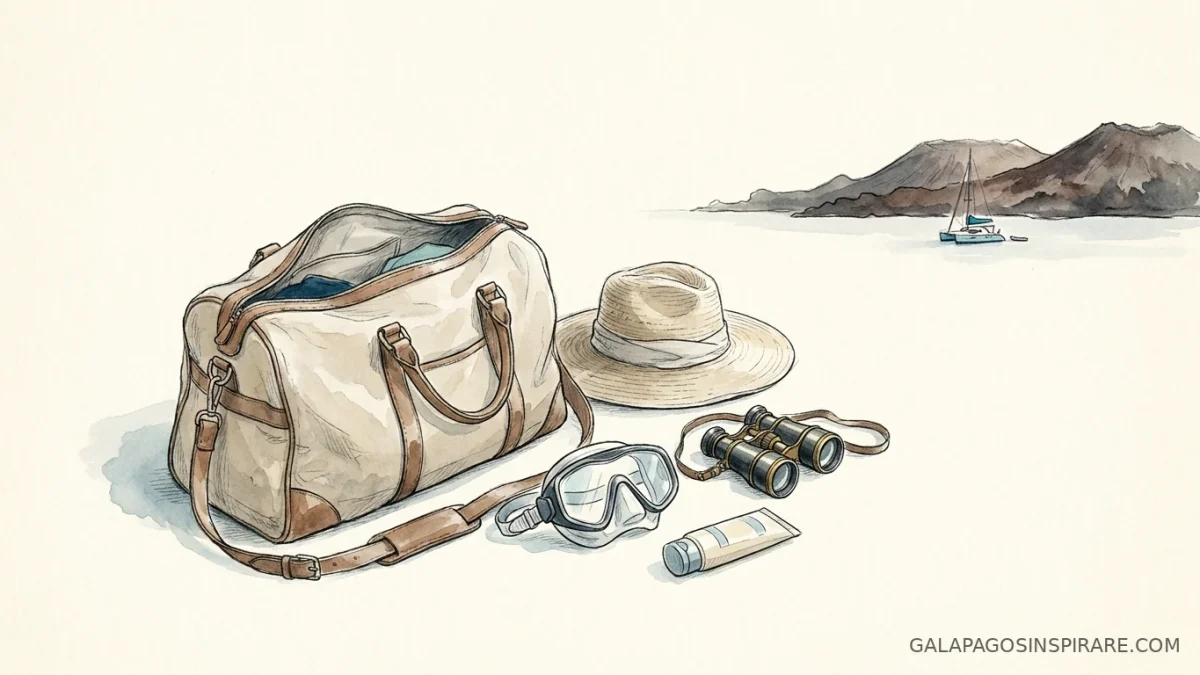
Whether you join a small ship or stay on land, the core of a Galapagos packing list is the same. These are the items guests tell us they used every single day:
- Reef-safe sunscreen (SPF 50) and lip balm with SPF
- Wide-brim hat with a chin strap for windy decks
- Polarized sunglasses with a strap
- Long-sleeve sun shirt or rash guard
- Sport sandals or water shoes for wet landings
- Closed walking shoes with grip for lava trails
- Light rain or wind jacket
- Small dry bag for the panga rides
- Refillable water bottle
- Compact binoculars
- Seasickness remedy you have used before
- Any personal medicine, in your carry-on
What to wear in the Galapagos by season
The islands have two main seasons. From about December to May the air and the sea are warmer, with sunny days and short tropical showers. From about June to November the cool Humboldt Current brings cooler water, grey skies and a misty drizzle called garúa, especially in the highlands. Our month-by-month guide to the best time to visit explains what each month looks like for wildlife.
| Item | Warm season (Dec–May) | Cool season (Jun–Nov) |
|---|---|---|
| Daytime clothing | Light, breathable shirts and shorts | Light layers, long trousers for the highlands |
| Evenings on deck | A light long-sleeve top | A fleece or light sweater and a wind jacket |
| Snorkeling | Rash guard; a shorty wetsuit is often enough | A full wetsuit is recommended; most ships provide or rent them |
| Rain gear | Compact rain jacket for short showers | Water-resistant jacket for garúa in the highlands |
| Sun protection | Essential every day | Still essential: the equator sun burns through cloud |
Dress on board is casual. Even on luxury yachts, a clean shirt and light trousers or a summer dress are enough for dinner. Neutral colors are practical in the field and look good in photos.
Snorkel, camera and gear
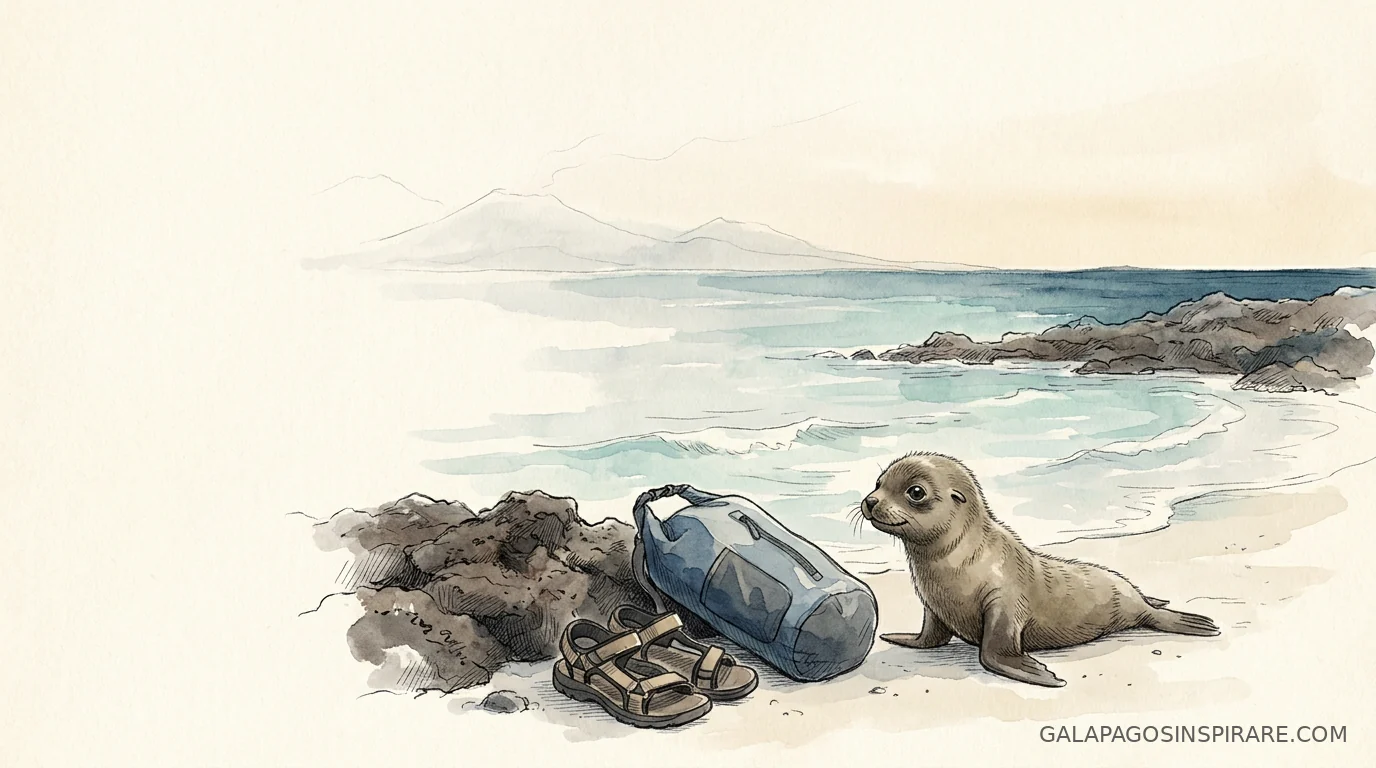
Most expedition yachts include masks, snorkels and fins, and many lend or rent wetsuits, so check with your ship before you pack heavy gear. If you wear glasses, a prescription mask from home makes a big difference. A small waterproof pouch or action camera is useful for snorkeling with sea lions and turtles, and a zoom lens of around 100–400 mm covers most birds. Our Galapagos photography cruise guide has more camera tips.
Documents, money and practical items
Ecuador uses the US dollar, and power sockets are the same 120 V type as in North America. Bring your passport (valid for at least six months), a printed copy of your cruise or hotel booking, and cash in small bills for the Galapagos National Park entrance fee, the Transit Control Card and tips. Card payments work in town, but not always on remote islands. Our guide on how to get to the Galapagos Islands explains the airport steps and fees.
Four checks for your Galapagos bag
What not to bring to the Galapagos
The islands have strict biosecurity rules to protect native species. Your bags are inspected before the flight and on arrival. Do not pack fresh fruit, plants, seeds, flowers, soil or animal products, and clean your hiking shoes before you travel. Drones need a special permit, so leave them at home. Leave single-use plastic bags and straws behind as well, since the islands restrict them. For insurance, sun and sea-safety tips, read our Galapagos travel safety guide.
Cruise or land-based: small differences in your bag
On a cruise, cabins are compact, so one soft bag per person is ideal, and you will live in sandals, swimwear and sun layers. Ships usually provide towels, snorkel gear and often reusable bottles. Read our 4-day, 5-day and 8-day cruise guides to see what a day on board looks like.
On a land-based or island-hopping trip you carry your bags between islands on small speedboats, so a light bag matters even more. Add a beach towel, a day pack and closed shoes for highland walks. For hotel ideas, see our best boutique hotels in the Galapagos and the Galapagos Safari Camp. Many land-based programs start under US$1,900 per person; for a group that wants a whole yacht, private charters start from around US$80,000.
Want a packing list made for your dates?
Tell us when you travel and which ship or hotels you are considering, and we will send a Galapagos packing list adapted to your season and itinerary.
Plan with a designer See Galapagos cruisesFAQ galapagos packing list
What should be on a Galapagos packing list?
A Galapagos packing list should include reef-safe sunscreen, a hat, polarized sunglasses, a rash guard, sport sandals, closed walking shoes, a light rain jacket, a dry bag and a refillable bottle.
What shoes do I need for the Galapagos?
Bring sport sandals or water shoes for wet landings on beaches, and closed shoes with good grip for dry landings and lava trails.
Do I need a wetsuit in the Galapagos?
From June to November the water is cool and a full wetsuit is recommended. Many ships provide or rent wetsuits, so ask before you pack one.
What is not allowed in Galapagos luggage?
Fresh fruit, plants, seeds, flowers, soil and animal products are not allowed. Bags are inspected, and drones need a special permit.
Is there a dress code on Galapagos cruises?
No. Dress is casual on all ships, including luxury yachts. Light, comfortable clothes and a layer for cool evenings are enough.