Listen to a short intro: galapagos safari camp
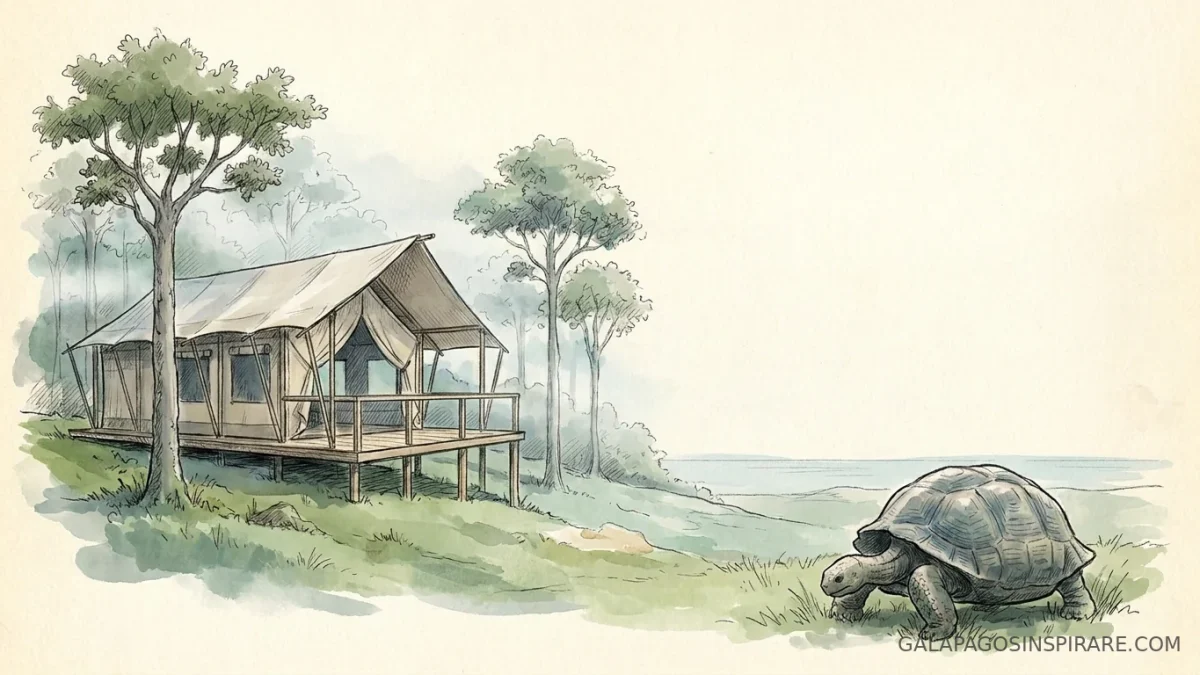
Galapagos Safari Camp is a small, family-run luxury tented camp in the green highlands of Santa Cruz Island. Instead of a hotel in town or a cabin at sea, you sleep in a raised canvas safari tent on a hillside that looks over the national park toward the ocean, with giant tortoises wandering the grounds. For travelers who love the idea of an African-style safari lodge but want Galapagos wildlife, it is one of the most distinctive stays in the islands.
This guide explains what the camp is like, who it suits best, how a typical day works and how to combine it with a cruise or other islands. We plan land-based and cruise journeys every week, so we focus on the practical questions guests ask us before they book.
What is Galapagos Safari Camp?
Galapagos Safari Camp was created by Michael Mesdag and Stephanie Bonham-Carter, and it is still family-owned and run. The idea was simple: offer an alternative to fixed group tours by giving travelers a quiet, comfortable base on land and building flexible, tailor-made days around it. The camp sits on a ridge in the Santa Cruz highlands, an area of farmland, scalesia forest and pasture where the island’s famous tortoises come to graze and wallow.
Accommodation is limited to nine safari tents and one family suite. The camp is elevated on its ridge, and the tents are spacious and comfortably furnished, so the feeling is closer to a boutique lodge than to camping. Meals lean on local produce, including ingredients from the camp’s own farm and the nearby sea. In 2026 the camp was voted among the best resorts in South America in the Condé Nast Traveler Readers’ Choice Awards, according to the official Galapagos Safari Camp website.
Safari camp, island hotel or cruise?
| Style | Best for | Trade-off |
|---|---|---|
| Highland safari camp | Privacy, nature on your doorstep, flexible private days | Daily boat trips start with a drive to the dock |
| Boutique hotel in town | Restaurants, walkable harbor, easy logistics | Less sense of wilderness at night |
| Small-ship cruise | Remote islands and the widest range of visitor sites | Fixed itinerary and a new anchorage every night |
If you are weighing land against sea, our Galapagos cruise vs island hopping comparison goes deeper, and our best boutique hotels guide covers the other premium places to stay.
A day at the camp, step by step
A typical Safari Camp day
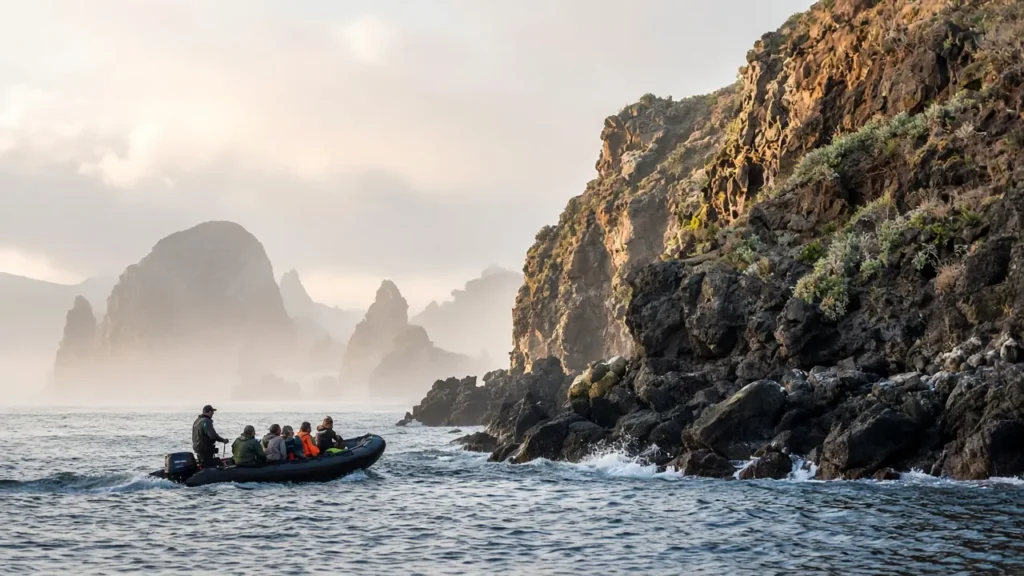
Because Santa Cruz is in the center of the archipelago, it works well as a hub. From here, licensed day tours reach nearby islands such as North Seymour, Santa Fe or the Plazas, depending on the park’s schedules and availability. Our North Seymour guide shows what one of those days looks like. On land, the highlands offer lava tunnels, scalesia forest and tortoise reserves, all a short drive away.
Who will love Galapagos Safari Camp?
Galapagos Safari Camp suits travelers who value space and privacy over a long list of islands. Couples often choose it for a romantic, slower pace, and it pairs well with ideas from our Galapagos honeymoons guide. Families like the family suite and the freedom of not moving every night, a point we cover in land-based vs cruise travel for families. Travelers who get seasick, or who simply prefer to sleep on solid ground, also find it an elegant answer.
- Couples and honeymooners who want quiet luxury
- Families who prefer one base and flexible days
- Photographers chasing tortoises in soft highland light
- Travelers prone to seasickness
- Guests combining land days with a short cruise
- Repeat visitors who want a slower Galapagos
It is less ideal if your priority is the most remote western or northern islands, which are reached best by ship. In that case, a few nights at the camp before or after a cruise give you the best of both worlds. Browse our expedition vessels to find a ship that fits the dates.
How to get there and plan your stay
Most guests fly into Baltra, cross the narrow Itabaca Channel to Santa Cruz and continue by road into the highlands. Our guide on how to get to the Galapagos Islands explains flights from Quito and Guayaquil, the transit card and park fees. Three or four nights at the camp is a comfortable minimum to enjoy the setting and fit in a couple of boat days.
Our land-based programs on Santa Cruz can start under US$1,900 per person, depending on season, length and the lodge you choose; the Safari Camp sits in the premium tier, so we quote current rates on request. Groups who want a yacht of their own can add a private yacht charter, with full-boat charters from around US$80,000. You can also explore our luxury stays for other land-based options.
Thinking about a highland safari stay?
Tell us your dates and travel style. We will design a land-based or land-and-sea journey that fits the way you like to travel.
Plan with a designer See luxury staysFAQ galapagos safari camp
Where is Galapagos Safari Camp located?
Galapagos Safari Camp is in the highlands of Santa Cruz Island, on a ridge overlooking the national park and the ocean, a road transfer from the Itabaca Channel and Baltra airport.
How many tents does the camp have?
There are nine safari tents and one family suite, which keeps the camp small, quiet and personal.
Can you see giant tortoises at the camp?
Yes. Wild giant tortoises roam the property and the surrounding highlands, so sightings near the tents are common.
Can I combine a safari camp stay with a cruise?
Yes. Many travelers spend a few nights on land before or after a small-ship cruise, which adds the highlands to the remote islands only reached by sea.
Is Galapagos Safari Camp good for families?
It can be. The family suite, flexible private days and one fixed base make it relaxed for families, though young children should be comfortable with a rural setting and cool, misty evenings.