Listen to a short intro: Are the Galapagos Islands safe
Are the Galapagos Islands safe? For most travelers, yes. The islands sit about 1,000 km off the coast of Ecuador, far from the mainland areas that official travel advisories warn about, and almost every visit to a national park site happens with a licensed naturalist guide. The real risks here are quieter: strong equatorial sun, ocean currents, small boats and limited medical care. This guide explains what official advice says in 2026, how to choose safe boats, and the simple habits that keep a Galapagos trip calm.
Are the Galapagos Islands safe in 2026? What official advice says
The U.S. State Department rates Ecuador as a whole at Level 2, “Exercise Increased Caution”, mainly because of crime on the mainland. Its stricter warnings apply to specific mainland and coastal areas, and the Galapagos Islands are not among them.
The UK Foreign, Commonwealth & Development Office (FCDO) advises against all but essential travel to several coastal provinces, including Guayas, where Guayaquil is. It makes an exception for airside transit at Guayaquil airport. If your flight to the islands connects in Guayaquil, check with your airline that you will stay airside, or fly from Quito instead. Our guide on how to get to the Galapagos Islands compares both routes.
Crime and personal safety in the islands
The four inhabited islands (Santa Cruz, San Cristóbal, Isabela and Floreana) have small, relaxed towns, and the crime warnings in official advisories are written about mainland cities, not about Galapagos. Normal travel sense is enough: keep your passport and cash in the hotel safe or your cabin, carry a copy of your passport (Ecuadorian law requires you to carry ID), and do not leave cameras alone on the beach.
On a cruise, personal safety is even simpler. You sleep on board, every landing is guided, and the crew knows exactly who is ashore. That is one reason many first-time visitors and solo travelers choose a small-ship cruise.
Boat safety: the risk most travelers overlook
The UK FCDO notes several serious accidents in Galapagos involving tour boats and the smaller vessels that move people between islands. Some small boats have not followed rules on licences, passenger limits, engine checks or life vests. This matters most on land-based trips, where you may take public speedboats between Santa Cruz, San Cristóbal and Isabela.
| Way to travel | Main safety point | What to check |
|---|---|---|
| Small-ship cruise | Licensed vessel, trained crew, guided landings | Life vests in your size, safety briefing on day one |
| Land-based island hopping | Inter-island speedboats can be rough and crowded | Use reputable operators, wear the life vest, sit low and near the back if you get seasick |
| Day trips from town | Quality varies a lot between operators | Book through your hotel or a trusted agency, ask about licences and life vests |
| Private charter | Full control of boat, crew and pace | A licensed yacht and a route approved by the national park |
If boat safety is a priority, a guided small-ship cruise removes most of these variables. Compare options on our Galapagos cruises page; for families or groups, a private yacht charter starts from around US$80,000 for the boat.
Health, insurance and medical care
Medical care in the islands is limited, and this is the most important thing to plan for. According to the UK FCDO, San Cristóbal has a relatively well-equipped public hospital, Santa Cruz has a basic hospital that is being refurbished, and Isabela has only a very small health centre. Serious cases are flown to the mainland.
The FCDO lists travel health insurance as mandatory for foreign tourists entering Galapagos and recommends a policy that includes air ambulance evacuation. Some cruise ships may also ask for your blood group and an emergency contact when you board. Drink bottled or filtered water, and bring any prescription medicines you need, since island pharmacies are small.
Nature risks: sun, sea, wildlife and volcanoes
Ocean currents and snorkeling
Currents can be strong and change quickly, and many beaches have no warning flags. Snorkel with your guide, use the wetsuit or flotation your boat provides, and ask locally before swimming from a beach on your own.
Wildlife
The animals are calm, but they are wild. Park rules ask you to keep about 2 metres (6 feet) away, never touch or feed them, and stay on marked trails. Give sea lion males extra space near their beaches, especially if you are in the water.
Volcanoes, earthquakes and tsunamis
Galapagos is volcanically active, and the FCDO lists a high tsunami risk for the coast and the islands, with sirens and evacuation routes in place. Eruptions are monitored and visits are adjusted when needed. Learn more in our guide to Galapagos volcanoes.
Weather and seasickness
Seas are usually calmer from January to May and rougher in the cooler garúa months, when some crossings can be bumpy. Our Galapagos weather guide explains the seasons; bring seasickness tablets either way.
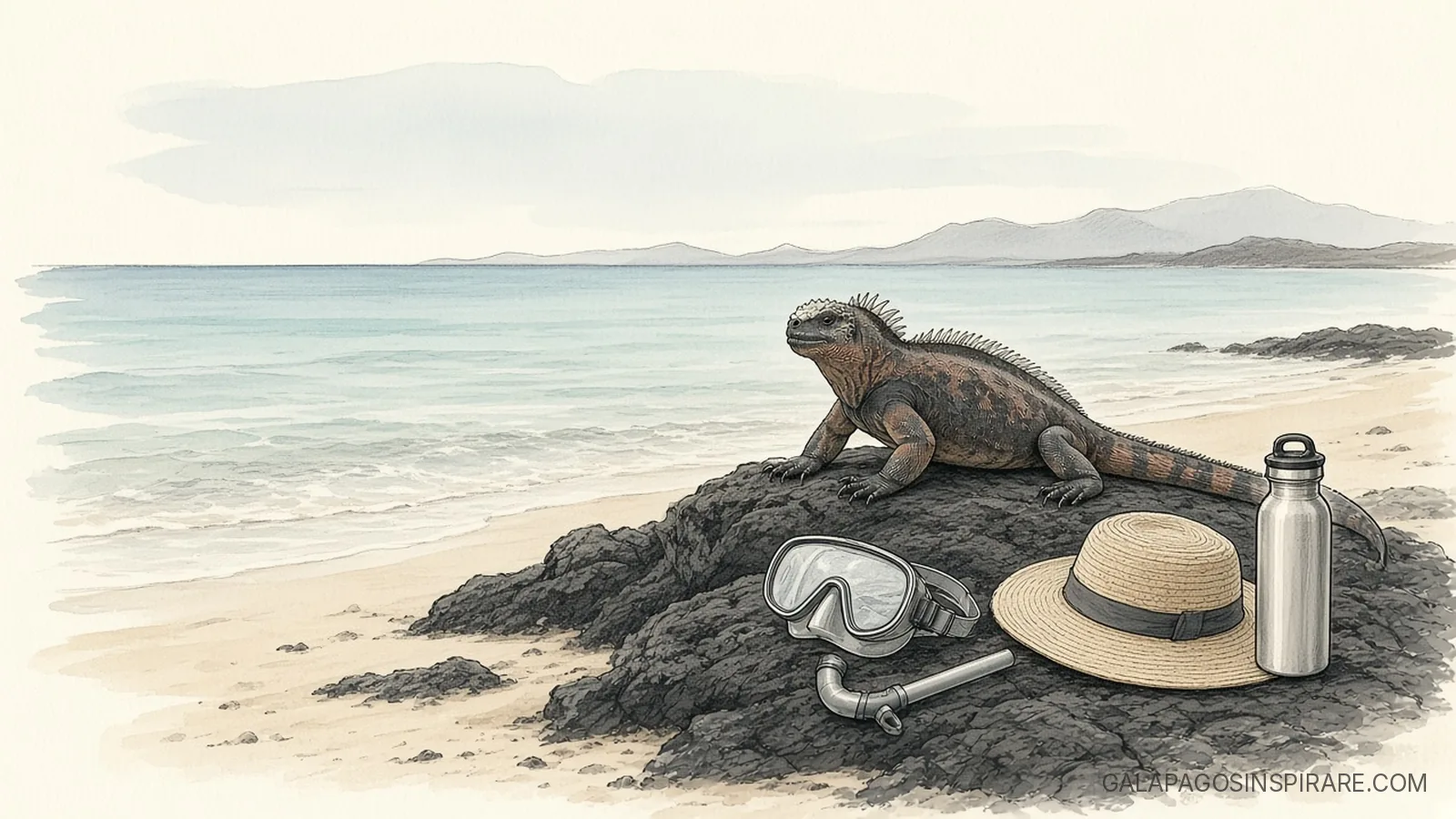
A simple Galapagos safety checklist
- Travel health insurance with air evacuation
- Transit Control Card (US$20) bought at Quito or Guayaquil airport
- National park fee: US$200 for foreign visitors over 12
- Copy of your passport with your entry stamp
- Licensed boats and operators only
- Life vest on every small-boat ride
- Hat, sunscreen and a refillable water bottle
- Seasickness tablets and your own medicines
The park fee and Transit Control Card amounts above come from the official Galapagos government websites. For what a typical package includes and what it leaves out, read our guide to all inclusive Galapagos Islands trips.
Is Galapagos safe for families, couples and solo travelers?
So, are the Galapagos Islands safe for your kind of trip? Yes, with the right trip style. Families like small ships with flexible activities; see our Galapagos family cruise guide. Couples and solo travelers often feel most at ease on a guided cruise, while confident travelers enjoy land-based stays; our island hopping guide explains how to combine islands, and many land-based programs start under US$1,900 per person.
Travel to Galapagos with peace of mind
Tell us your dates and travel style, and our travel designers will suggest licensed boats, well-located hotels and an itinerary that fits you.
Plan with a designer See Galapagos cruisesFAQ Are the Galapagos Islands Safe
Are the Galapagos Islands safe for tourists?
Yes. Are the Galapagos Islands safe compared with mainland Ecuador? Official advisories focus their warnings on mainland and coastal areas, not on the islands. The main risks for tourists are sun, sea conditions, small boats and limited medical care.
Is it safe to fly to Galapagos through Guayaquil?
The UK FCDO advises against all but essential travel to Guayas province but allows airside transit at Guayaquil airport. Check with your airline that you stay airside, or fly via Quito.
Do I need travel insurance for Galapagos?
Yes. The UK FCDO lists travel health insurance as mandatory for foreign tourists entering Galapagos. Choose a policy that covers medical evacuation by air.
Is it safe to swim and snorkel in Galapagos?
Generally yes, especially with a guide. Currents can be strong and many beaches have no warning flags, so snorkel with your group and ask locally before swimming alone.
Are the animals in Galapagos dangerous?
Rarely. They are calm but wild. Keep about 2 metres away, never touch or feed them, and give male sea lions extra space near their beaches.