Listen to a short intro: galapagos volcanoes
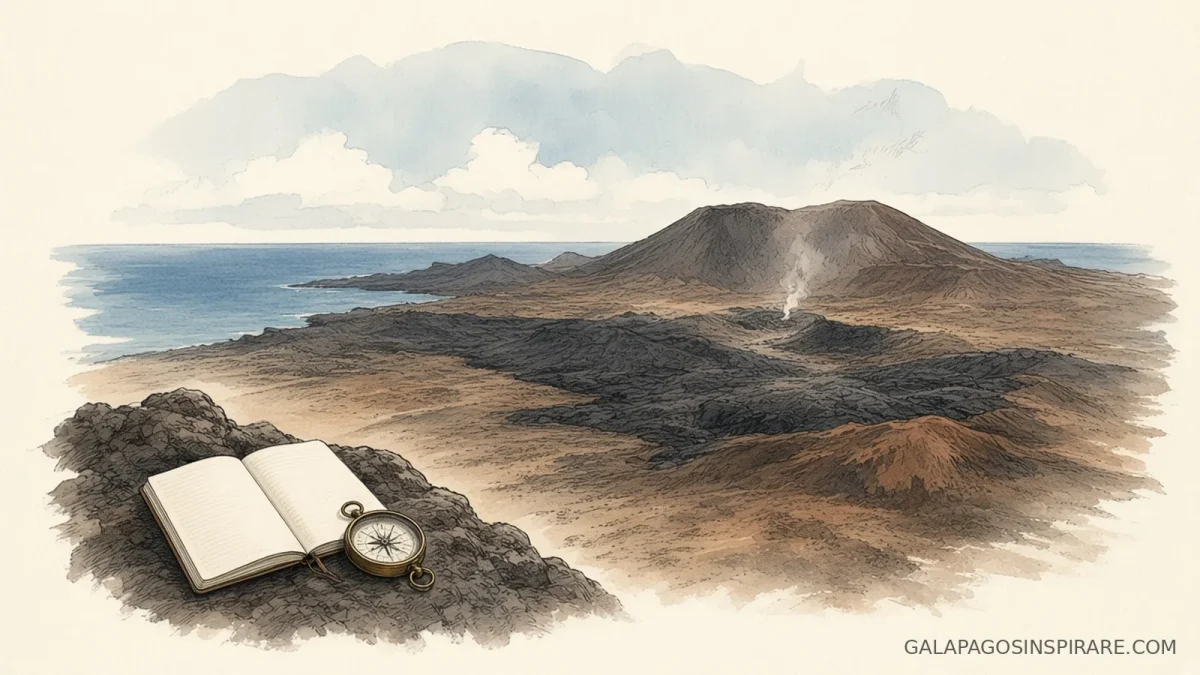
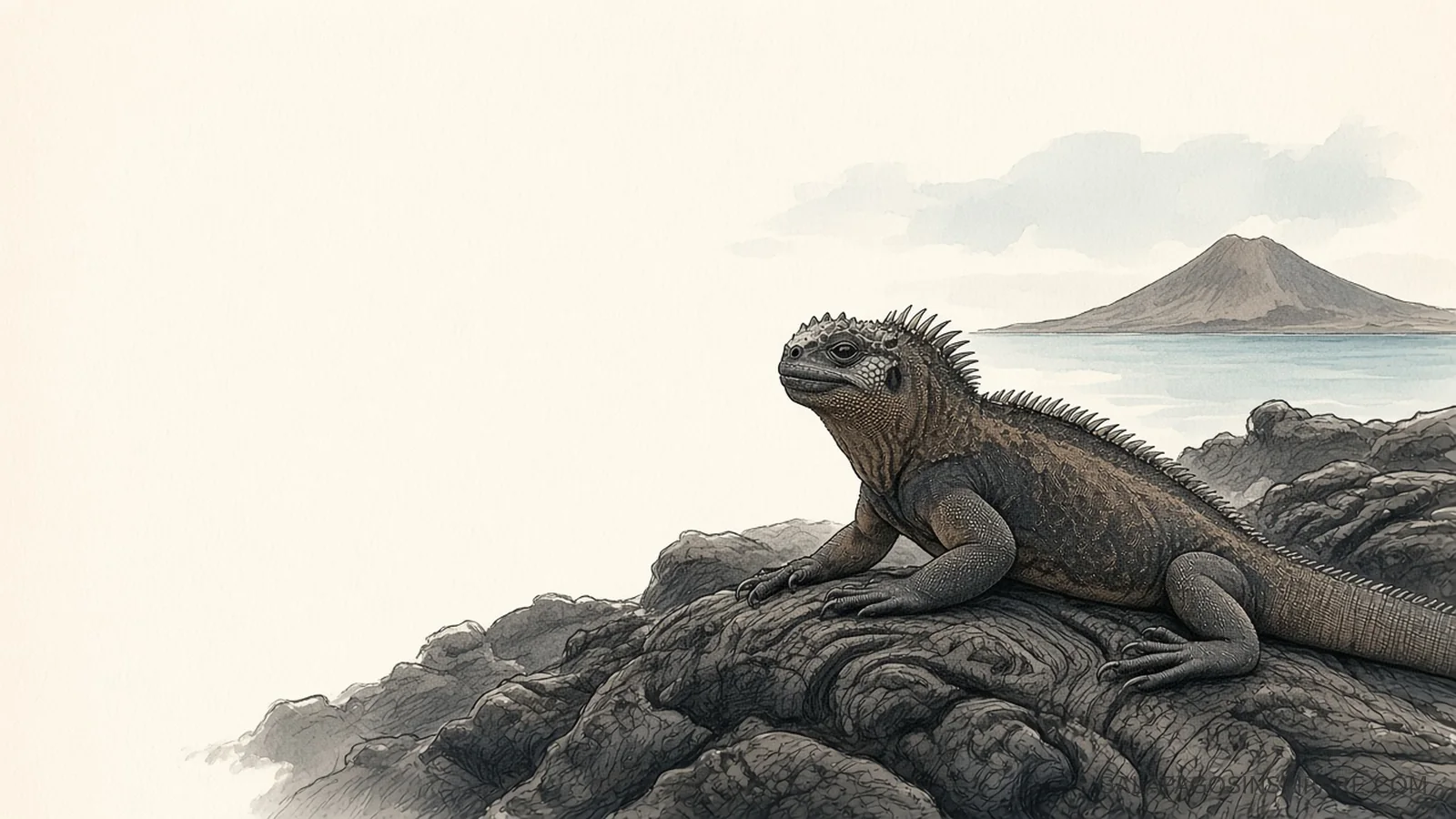
The Galapagos volcanoes built every island you will walk on. The archipelago sits over a volcanic hotspot in the Pacific, and some of its volcanoes are among the most active on Earth. On a cruise or an island-hopping trip you can hike to the rim of a huge caldera, walk across lava that cooled little more than a century ago and watch marine iguanas warm up on black rock.
This guide explains how the islands formed, which volcanoes are still active, and the best volcano hikes and lava landscapes to include in a Galapagos itinerary.
How the Galapagos Islands formed
The islands grow over a hotspot, a plume of hot rock rising from deep in the Earth’s mantle. The Nazca Plate slowly moves east-southeast over that fixed hotspot, a few centimeters every year. New volcanoes form in the west, above the plume, while older islands are carried east, cool down and erode. Discover more curiosities like this in our fun facts about the Galapagos Islands.
That is why the landscape changes so much as you travel. Española and San Cristóbal in the southeast are old, low and weathered, with soil, beaches and more vegetation. Fernandina and western Isabela are young and raw, with fresh lava fields, tall shield volcanoes and very little plant life. Our western islands cruise guide covers the youngest part of the archipelago.
The most famous Galapagos volcanoes
Most Galapagos volcanoes are shield volcanoes: broad, gently sloping mountains built by runny basalt lava. Several have large summit calderas. These are the names you will hear from your naturalist guide:
| Volcano | Island | Why it matters |
|---|---|---|
| Sierra Negra | Isabela | One of the largest calderas in the world; the classic volcano hike from Puerto Villamil. Erupted in 2005 and 2018. |
| Wolf | Isabela | Highest point of the islands and home of the pink land iguana. Erupted in 2015 and 2022. |
| La Cumbre | Fernandina | One of the most active volcanoes in the archipelago, with several eruptions since 2017. |
| Alcedo | Isabela | Known for its large population of wild giant tortoises and steaming fumaroles. |
| Cerro Azul | Isabela | Steep young volcano in the southwest, with eruptions in 2008 and 2017. |
Eruptions are monitored by Ecuador’s Geophysical Institute, and the Galapagos National Park closes visitor sites when needed. Most eruptions happen on uninhabited volcanoes, and they are often watched from a safe distance by boat.
Best volcano hikes and lava landscapes
Sierra Negra and Volcán Chico, Isabela
The best-known hike among the Galapagos volcanoes starts in the highlands above Puerto Villamil. The trail follows the rim of the Sierra Negra caldera and then crosses colorful lava fields to Volcán Chico, a group of fissure cones with views over northern Isabela. It is a full day of around 16 km round trip, so it suits land-based travelers who stay a few nights on Isabela.
Bartolomé, Santiago
A wooden boardwalk climbs to the summit of Bartolomé past spatter cones and lava tubes. From the top you see Pinnacle Rock and the twin beaches below, the most photographed view in the islands. Bartolomé appears on many northern and central routes; see our northern islands cruise guide.
Sullivan Bay, Santiago
Here you walk on a smooth, ropy pahoehoe lava flow from the late 1800s. The black surface is full of folds, cracks and the first pioneer plants, a living lesson in how new land is colonized.
Santa Cruz highlands
Two easy volcanic stops are close to Puerto Ayora: the lava tunnels, where you can walk through a tube left by flowing lava, and Los Gemelos, two large pit craters in the Scalesia forest. They combine well with a stay at the Galapagos Safari Camp.
Fernandina, Tagus Cove and Genovesa
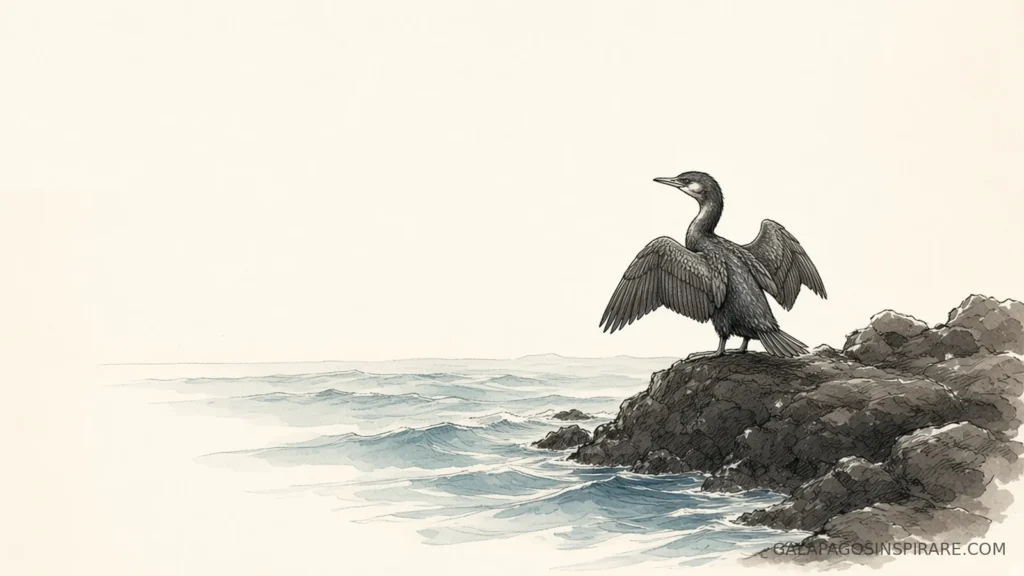
At Punta Espinoza on Fernandina, marine iguanas and flightless cormorants live on young lava fields. At Tagus Cove on Isabela, a trail climbs to Darwin Lake, a saltwater lake inside a tuff cone. In the north, Darwin Bay on Genovesa is the flooded caldera of a collapsed volcano, now full of seabirds.
Seeing the volcanoes on a cruise or on land
Western-route cruises are the best way to see the youngest volcanoes, because Fernandina and western Isabela are only reachable by ship. Small expedition yachts reach Punta Espinoza, Tagus Cove and Urbina Bay; compare them on our expedition vessels page or browse all Galapagos cruises.
A land-based trip is the easiest way to hike Sierra Negra and explore the Santa Cruz highlands at your own pace. Many land-based programs start under US$1,900 per person. For families or groups who want their own route through the volcanic west, private yacht charters start from around US$80,000. The month-by-month guide helps you choose cooler months for hiking.
Four volcanic highlights for one trip
Want to hike the Galapagos volcanoes?
Tell us your dates and how active you like to be, and our travel designers will build a cruise or land-based itinerary around the volcanoes and lava landscapes you want to see.
Plan with a designer See Galapagos cruisesFAQ galapagos volcanoes
Are the Galapagos volcanoes still active?
Yes. Several Galapagos volcanoes are still active, especially on Fernandina and Isabela. La Cumbre, Wolf, Sierra Negra and Cerro Azul have all erupted in the last two decades.
How were the Galapagos Islands formed?
They formed from volcanoes over a hotspot in the Pacific. The Nazca Plate carries the islands east, so the eastern islands are older and the western islands are younger.
Can you hike a volcano in the Galapagos?
Yes. The most popular hike goes along the rim of Sierra Negra to Volcán Chico on Isabela. Bartolomé and the Santa Cruz highlands offer shorter volcanic walks.
Which is the highest volcano in the Galapagos?
Wolf Volcano on northern Isabela is the highest, at about 1,707 meters above sea level.
Is it safe to visit the islands near active volcanoes?
Yes. Volcanic activity is monitored, eruptions usually happen on uninhabited volcanoes, and the Galapagos National Park closes sites when needed.