Listen to a short intro: fun facts about the Galapagos Islands
These fun facts about the Galapagos Islands explain why a small group of volcanic islands on the equator changed the way we understand life on Earth. The archipelago has animals that live nowhere else, birds that forgot how to fly, a lizard that swims in the sea and penguins that live in the tropics. Each fact below is also something you can see for yourself on a cruise or a land-based trip.
We grouped them into geography, wildlife, history and travel, so you can read the whole list or jump to the part that interests you most.
Geography: fun facts about the Galapagos Islands and their volcanoes
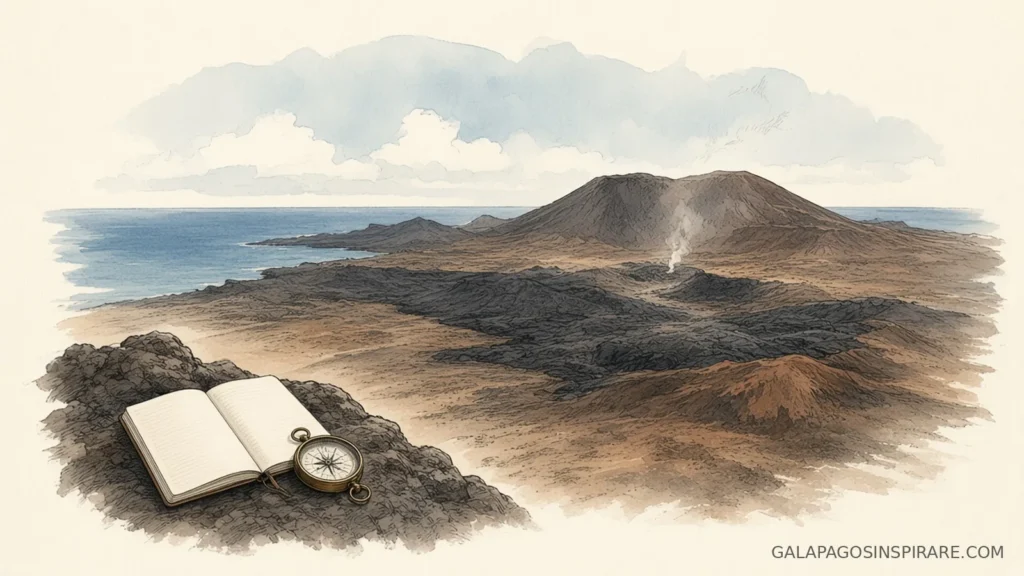
The islands sit right on the equator, roughly 1,000 km (about 600 miles) west of mainland Ecuador. They were never connected to a continent. Every island was built by volcanoes rising from the ocean floor over a hotspot, so every plant and animal here arrived by flying, floating or swimming.
- On the equator. The equator crosses the north of Isabela, so on some routes you sail from the southern to the northern hemisphere.
- 13 main islands. There are 13 main islands and more than 100 smaller islets and rocks. Only four are inhabited: Santa Cruz, San Cristóbal, Isabela and Floreana.
- Isabela is six volcanoes. The largest island formed when six shield volcanoes grew together. Wolf Volcano, at about 1,707 m, is the highest point.
- Young in the west. Fernandina and western Isabela are the youngest and most active islands; the eastern islands are the oldest.
- Three ocean currents. The cold Humboldt Current, the warm Panama Current and the deep Cromwell Current meet here and feed the marine life.
- A huge marine reserve. The Galapagos Marine Reserve protects the waters around the islands and was expanded in 2022 with the new Hermandad reserve.
If geology is your thing, our guide to the Galapagos volcanoes covers the best lava hikes and craters.
Wildlife facts you can see with your own eyes
Wildlife is the reason most people travel here, and the animals are famously calm around people. Many of the most surprising facts are about species found only in these islands.
The only sea-going lizard
The marine iguana is the only lizard in the world that feeds in the ocean. It dives for algae, then warms up on black lava. To get rid of the extra salt, it sneezes it out through glands near its nose.
Penguins in the tropics
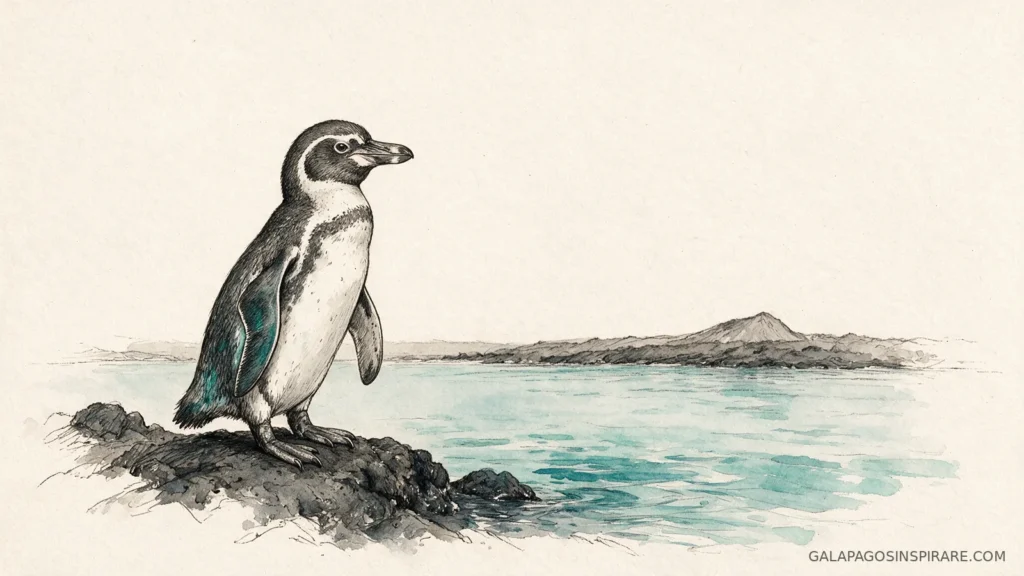
The Galapagos penguin is the only penguin that lives north of the equator. Most live on Fernandina and western Isabela, and a few colonies on northern Isabela sit just across the line. They survive thanks to the cold currents. Read more in our Galapagos penguin facts.
A cormorant that cannot fly
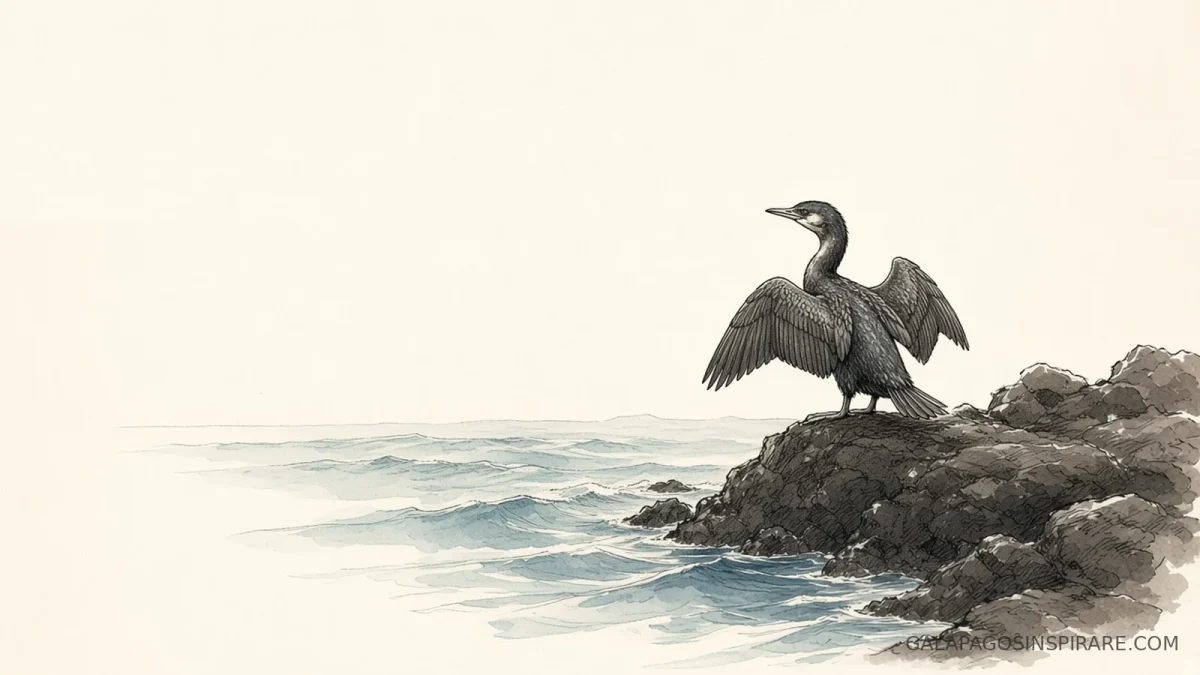
The flightless cormorant lives only on Fernandina and Isabela. With no land predators and rich waters close to shore, it lost the ability to fly and became a strong swimmer. After fishing, it still spreads its small wings to dry in the sun.
The islands are named after the tortoises
“Galápago” is an old Spanish word for a type of saddle, and early sailors used it for the giant tortoises whose shells looked like one. Galapagos giant tortoises can weigh more than 250 kg and live well over 100 years. You can see them in the wild in the Santa Cruz highlands.
More fun facts about the Galapagos Islands wildlife
- Blue feet matter. Male blue-footed boobies show off their bright blue feet in a slow dance; the brighter the blue, the healthier the bird.
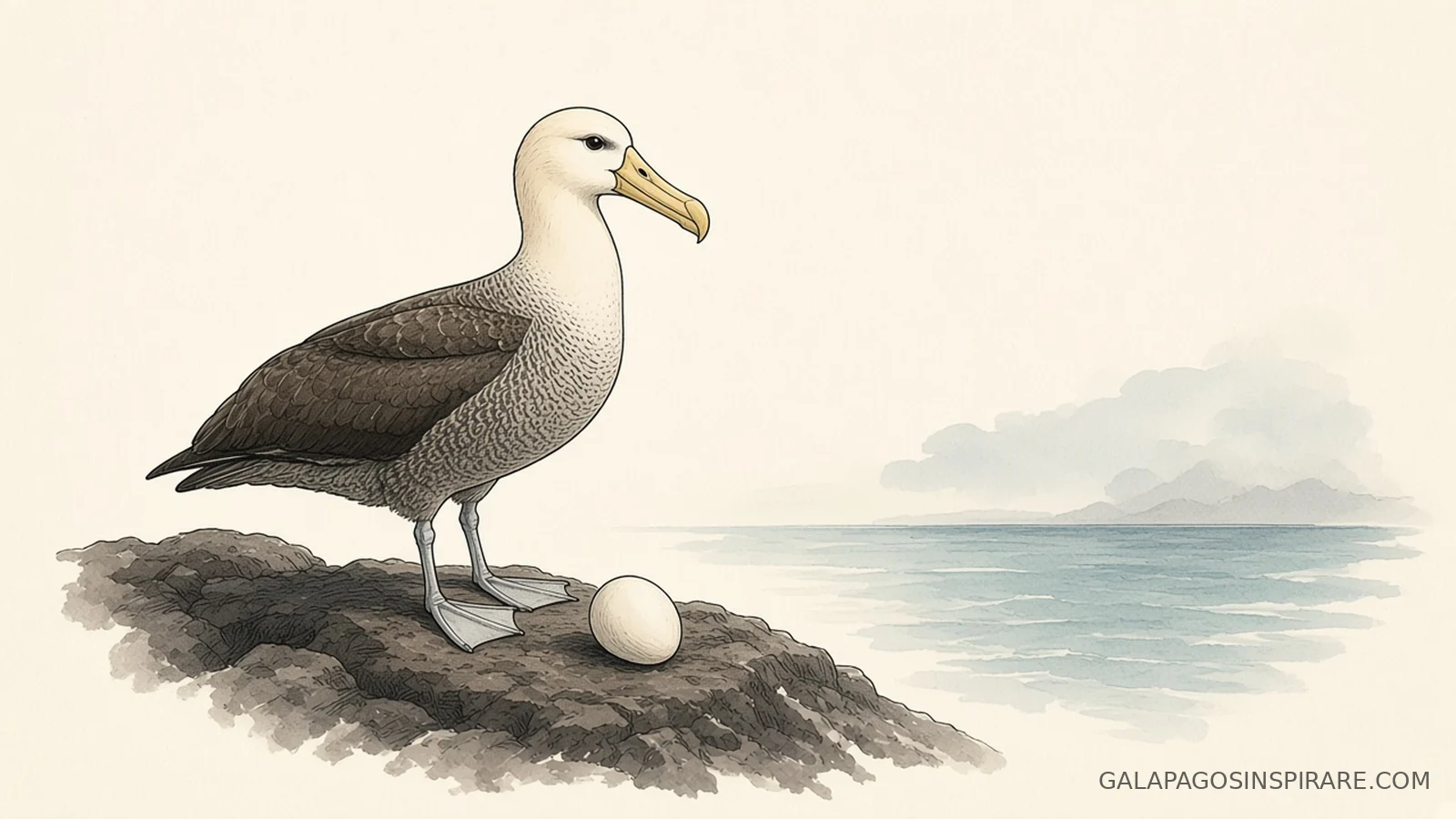
- One island, one albatross. Almost the entire world population of waved albatross nests on Española, from about April to December.
- Darwin’s finches. Several closely related finch species have different beak shapes for different foods, a classic example of evolution.
- A pink iguana. A pink land iguana lives only on the slopes of Wolf Volcano and was formally described in 2009.
- Sally Lightfoot crabs. These bright red crabs cover the lava shorelines and are one of the easiest animals to photograph.
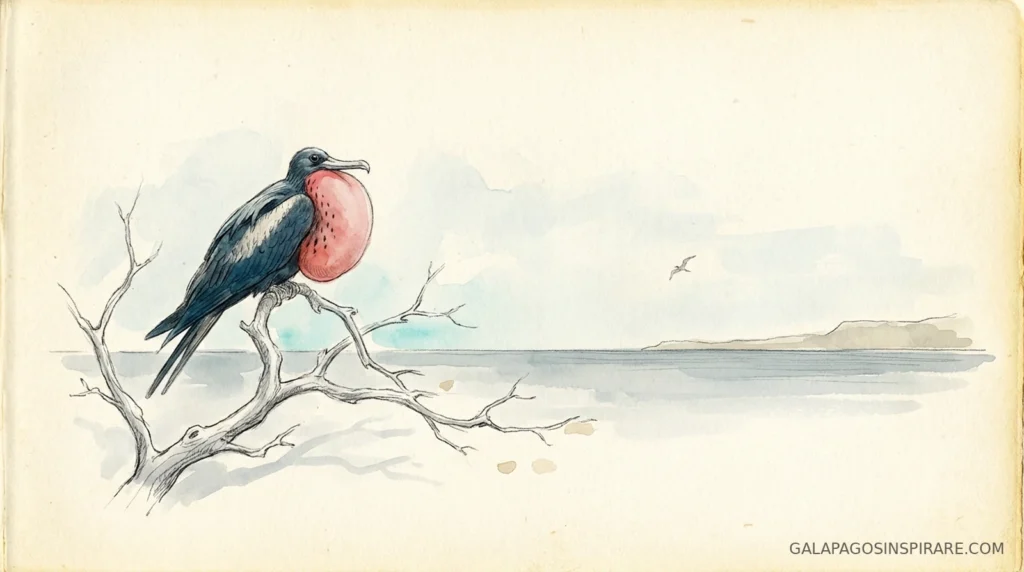
- Frigatebirds. Males inflate a red throat pouch like a balloon during the breeding season, easy to see on North Seymour.
For a short walk with nesting frigatebirds and boobies, see our North Seymour trail guide.
History facts: from a lost bishop to Darwin
The islands were found by accident in 1535, when the ship of Tomás de Berlanga, the Bishop of Panama, drifted off course on its way to Peru. For centuries they were a stop for pirates and whalers. Ecuador claimed the archipelago in 1832.
Charles Darwin arrived in 1835 aboard HMS Beagle and spent about five weeks in the islands. What he saw helped shape his theory of evolution by natural selection, published in On the Origin of Species in 1859. On Floreana, the barrel at Post Office Bay has worked as an informal mail service since the late 1700s: visitors still leave postcards and carry others home to deliver by hand.
Travel facts every visitor should know
- A licensed guide. Most visitor sites can only be visited with a licensed Galapagos National Park naturalist guide.
- Keep your distance. Visitors are asked to stay about 2 meters (6 feet) away from wildlife, even when animals come closer.
- Park entrance fee. Foreign adult visitors pay a US$200 national park fee, plus a transit control card, before entering.
- Flights from the mainland. You reach the islands on flights from Quito or Guayaquil to Baltra or San Cristóbal.
Our guide on how to get to the Galapagos Islands explains flights and airports, and the month-by-month guide helps you choose the right season.
How to see these facts on your own trip
A cruise is the best way to reach remote islands like Fernandina, Española and Genovesa, where many of the species above live. Compare small ships and yachts on our Galapagos cruises page.
If you prefer to sleep on land, island-hopping lets you combine Santa Cruz, Isabela and San Cristóbal with day trips, and many land-based programs start under US$1,900 per person; see our luxury stays. For families or groups who want the whole boat, private yacht charters start from around US$80,000.
Want to see these islands for yourself?
Tell us which animals and places you most want to see, and our travel designers will build a cruise or land-based itinerary around them.
Plan with a designer See Galapagos cruisesFAQ fun facts about the Galapagos Islands
What are some fun facts about the Galapagos Islands?
Some fun facts about the Galapagos Islands: they sit on the equator, 97% of the land is a national park, the marine iguana is the only sea-going lizard, and the Galapagos penguin is the only penguin living north of the equator.
Why are the Galapagos Islands so famous?
They are famous for their unique wildlife, much of it found nowhere else, and for Charles Darwin’s 1835 visit, which helped inspire his theory of evolution.
How many islands are in the Galapagos?
There are 13 main islands and more than 100 smaller islets and rocks. Four of them are inhabited.
Can you visit the Galapagos Islands on your own?
You can stay in the towns on your own, but most visitor sites in the national park require a licensed naturalist guide.
What animal is the Galapagos named after?
The islands are named after the giant tortoises. “Galápago” is an old Spanish word for a saddle, which their shells resemble.