Listen to a short intro: galapagos island names
Learning the Galapagos island names is the fastest way to make sense of cruise routes, flight options and wildlife guides. The archipelago has 13 major islands, a handful of smaller ones and well over 100 islets and rocks, and most of them carry two names: an official Spanish name and an older English one that still appears on maps and in Darwin’s notes. This guide lists them all, explains where the names come from and shows which islands you can actually visit.
How Many Islands Are in the Galapagos?
The answer depends on what counts as an island. Encyclopaedia Britannica lists 13 major islands of 14 to 4,588 km², 6 smaller islands and scores of islets and rocks lying across the equator about 1,000 km (600 miles) west of mainland Ecuador. Counted together, the archipelago has about 127 islands, islets and rocks, of which 19 are larger than 1 km². On official Ecuadorian maps the group is still called the Archipiélago de Colón.
Only four islands have towns: Santa Cruz (Puerto Ayora), San Cristóbal (Puerto Baquerizo Moreno, the provincial capital), Isabela (Puerto Villamil) and Floreana (Puerto Velasco Ibarra). Baltra hosts the main airport, as our guide to getting to the Galapagos explains.
Galapagos Island Names: The 13 Major Islands
The table below lists the 13 major Galapagos island names, roughly from largest to smallest, with the English name you may still see on older charts and in books about Darwin.
| Official (Spanish) name | Old English name | Why it matters to travelers |
|---|---|---|
| Isabela | Albemarle | Largest island, six shield volcanoes, inhabited (Puerto Villamil) |
| Santa Cruz | Indefatigable | Main hub, Puerto Ayora, tortoise highlands, inhabited |
| Fernandina | Narborough | Youngest and most volcanically active island |
| Santiago (San Salvador) | James | Lava flows at Sullivan Bay, fur seal grottos |
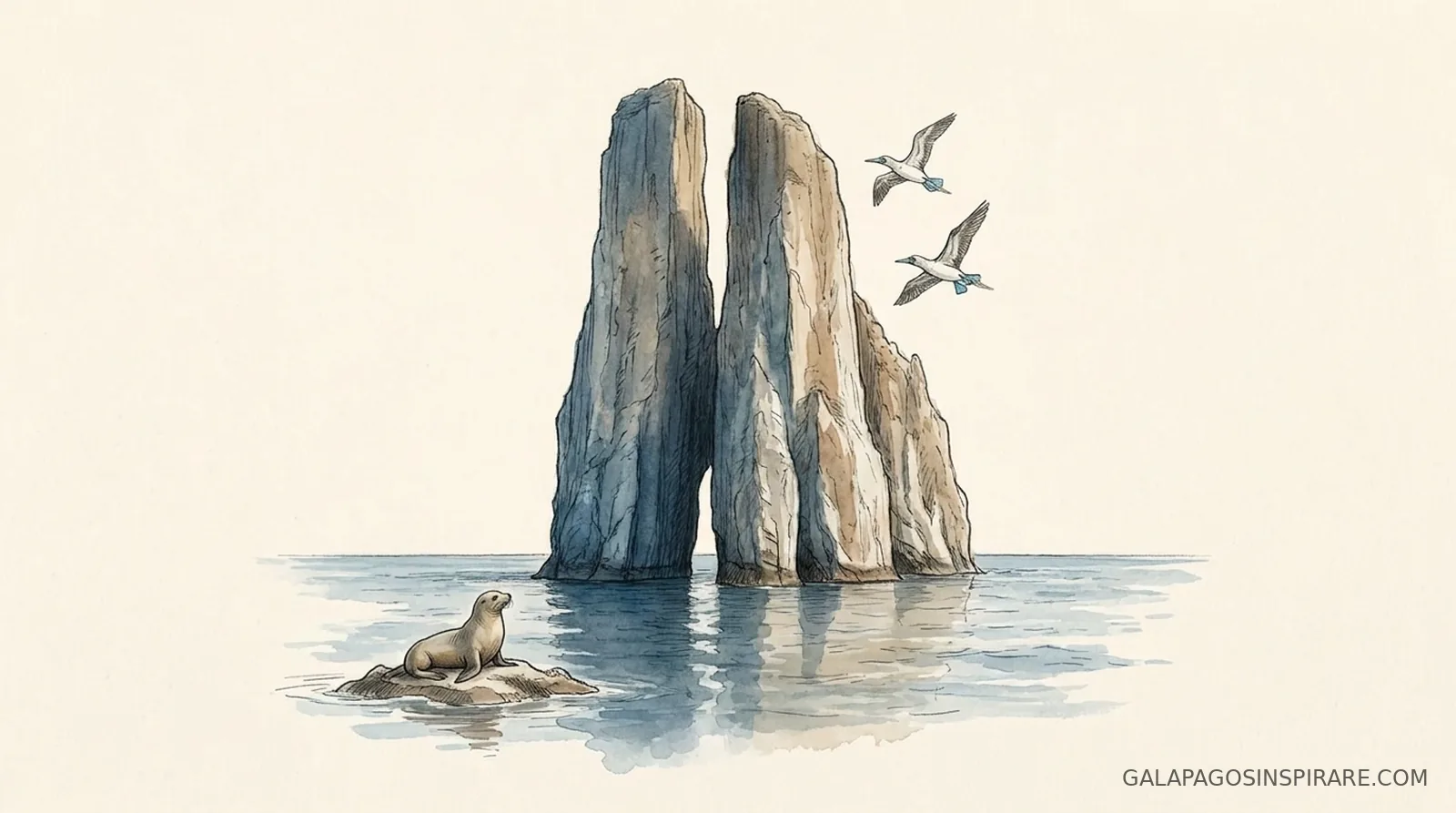
| San Cristóbal | Chatham | Provincial capital, Kicker Rock, inhabited |
| Floreana (Santa María) | Charles | Post Office Bay, flamingo lagoon, inhabited |
| Marchena | Bindloe | Remote northern island, mainly for divers |
| Española | Hood | Waved albatross colony, one of the oldest islands |
| Pinta | Abingdon | Lonesome George’s home island, closed to tourism |
| Baltra | South Seymour | Main airport, short transfer to Santa Cruz |
| Santa Fe | Barrington | Endemic land iguana, sea lion colony |
| Pinzón | Duncan | Tortoise restoration island, no regular visitor site |
| Genovesa | Tower | “Bird island”: red-footed boobies, frigatebirds |
Smaller Islands and Islets You Will Hear About
Many of the most famous visitor sites are on small islands. These are the names you are most likely to see on a cruise itinerary or a day-tour menu:
- Bartolomé (Bartholomew)
- Rábida (Jervis)
- North Seymour
- South Plaza and North Plaza
- Daphne Major
- Darwin (Culpepper)
- Wolf (Wenman)
- Sombrero Chino
- Mosquera
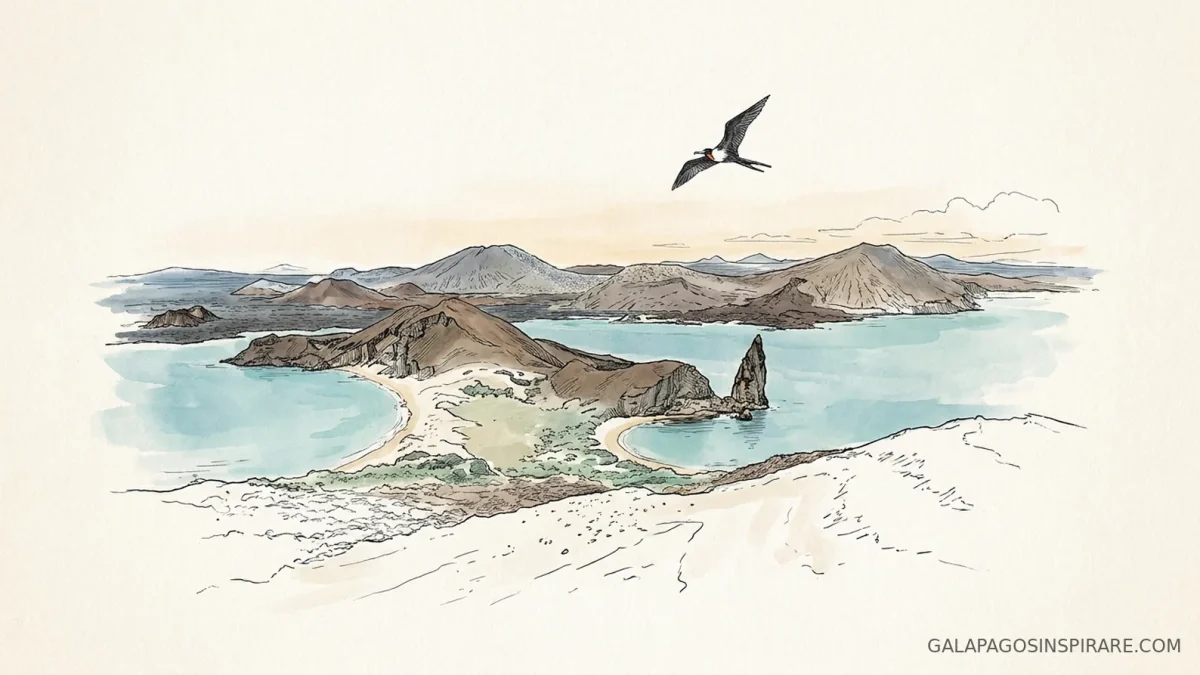
Bartolomé’s Pinnacle Rock is the most photographed view in the islands, while North Seymour is a classic first stop for blue-footed boobies and frigatebirds. Darwin and Wolf, far to the north, are reserved for dive liveaboards.
Why Each Island Has Two Names
The English names date from 1684, when the buccaneer Ambrose Cowley published the first detailed chart of the islands and named 16 of them after English royalty, nobles and potential patrons. British captain James Colnett added more names in 1793. Ecuador annexed the archipelago on 12 February 1832 and Spanish names gradually replaced the English ones; in 1892, for the 400th anniversary of Columbus’s first voyage, the group was renamed the Archipiélago de Colón, and several islands carry names linked to that voyage, such as Isabela, Fernandina and Pinta. That is why Darwin, who arrived on HMS Beagle in 1835, wrote about Chatham, Charles, Albemarle and James. Read more in our guide to the Galapagos Islands and Darwin.
Which Galapagos Islands Can You Visit?
Every island is part of the Galapagos National Park, and visitors may land only at designated sites with a licensed naturalist guide. On land-based trips you stay on the inhabited islands and take day tours to nearby places such as North Seymour, Bartolomé, Santa Fe or South Plaza. Remote islands such as Genovesa, Fernandina and Española are reached mainly by cruise; see our northern, eastern and western islands cruise guides. Pinta, Marchena, Pinzón, Darwin and Wolf have no regular land visits.
Knowing the Galapagos island names also helps you compare routes: two cruises of the same length can visit completely different islands. Our sample Galapagos itineraries show how to combine them, and the Galapagos volcanoes guide explains why the western islands are the youngest.
FAQ Galapagos Island Names
What are the Galapagos island names in English and Spanish?
The main Galapagos island names in Spanish and English are Isabela (Albemarle), Santa Cruz (Indefatigable), Fernandina (Narborough), Santiago (James), San Cristóbal (Chatham), Floreana (Charles), Marchena (Bindloe), Española (Hood), Pinta (Abingdon), Baltra (South Seymour), Santa Fe (Barrington), Pinzón (Duncan) and Genovesa (Tower).
How many islands are in the Galapagos?
There are 13 major islands, 6 smaller islands and scores of islets and rocks, roughly 127 in total according to standard geographic counts.
Which Galapagos islands are inhabited?
Four: Santa Cruz, San Cristóbal, Isabela and Floreana. Baltra has the main airport and a military base but no town.
What is the largest Galapagos island?
Isabela, at about 4,588 km² (1,771 square miles), makes up more than half of the archipelago’s total land area of about 8,010 km².
Why do the Galapagos islands have English names?
English buccaneer Ambrose Cowley charted and named many islands in 1684, and British captain James Colnett added names in 1793. After Ecuador annexed the islands in 1832, Spanish names gradually took over, but the English names still appear in historical texts and Darwin’s notes.
Want to see the islands with the most beautiful names? Tell us your dates and we will match the right route.
Plan your Galapagos trip