Listen to a short intro: Galapagos Islands and Darwin
The story of the Galapagos Islands and Darwin is one of the most famous in science, and it is shorter than most people think. HMS Beagle spent just five weeks in the archipelago in 1835, and Charles Darwin went ashore on only four islands. Yet what he saw there helped shape his theory of evolution. This guide follows his route island by island, explains what he noticed, and shows where you can walk in his footsteps today.
Why the Galapagos Islands and Darwin are linked
Darwin was 26 and the naturalist on a British survey ship. The Beagle’s voyage lasted almost five years, from December 1831 to October 1836, and the Galapagos took up only a small part of it. At the time, Darwin was working mostly as a geologist: he studied lava flows, tuff cones and craters. The biological ideas came later, back in England, when he and other experts studied the birds, plants and reptiles he had collected.
That is why the bond between the Galapagos Islands and Darwin matters so much to visitors today. The same lava fields, cones and coves he described are still there, and many are official visitor sites of the Galapagos National Park. Our fun facts about the Galapagos Islands give the wider history, from pirates to the national park.
Darwin’s route island by island: when did he go to the Galapagos?
The Beagle arrived from the east on 15 September 1835. Over the next five weeks it moved from island to island while the officers made charts that sailors still used more than a century later. This is where Darwin went ashore:
| Island (1835 name) | Dates ashore | What Darwin did | Visiting today |
|---|---|---|---|
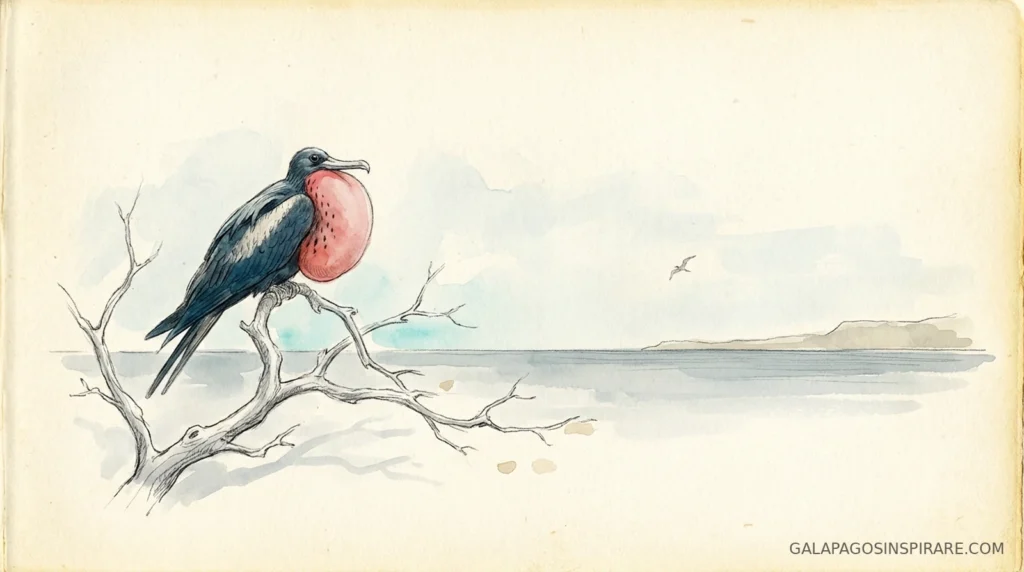
| San Cristóbal (Chatham) | 16–22 September | First landing at today’s Cerro Tijeretas (Frigatebird Hill); explored Cerro Brujo and a lava field he called the “Craterized District”. | Cerro Tijeretas is a trail near Puerto Baquerizo Moreno; Cerro Brujo is visited on many eastern cruises. |
| Floreana (Charles) | 24–27 September | Anchored at Post Office Bay, met the acting governor Nicholas Lawson and climbed to the highlands. | Post Office Bay, with its old barrel “post office”, is a classic stop on southern routes. |
| Isabela (Albemarle) | 1 October | Explored Tagus Cove and the crater lake now called Beagle Crater; saw his first land iguanas. | Tagus Cove is a visitor site on western cruises and can only be reached by boat. |
| Santiago (James) | 8–17 October | Camped at Buccaneer Cove with three companions while the ship fetched water; explored the highlands and saw many tortoises. | Santiago’s west coast appears on some northern and western itineraries. |
After picking Darwin up on Santiago, the Beagle sailed north past Wolf and Darwin islands and left the archipelago on 20 October, bound for Tahiti. If you want to see the same coasts, our eastern islands cruise and western islands cruise guides explain which routes cover San Cristóbal and Isabela.
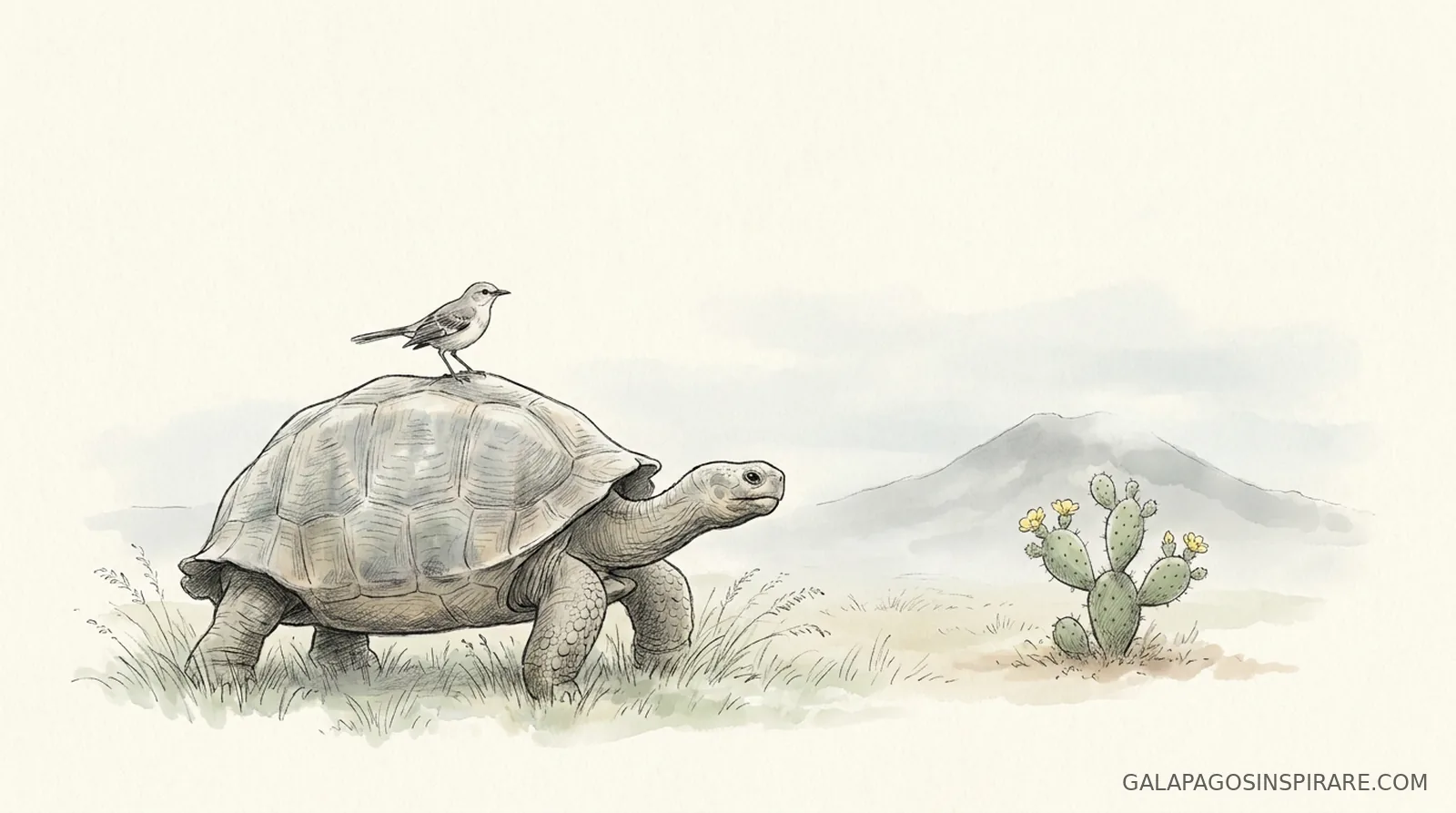
What Darwin noticed: tortoises, mockingbirds and finches
- Giant tortoises. On Floreana, the acting governor told Darwin he could tell which island a tortoise came from by the shape of its shell.
- Mockingbirds. Darwin saw that the mockingbirds on different islands were not the same, and he kept track of where each one came from.
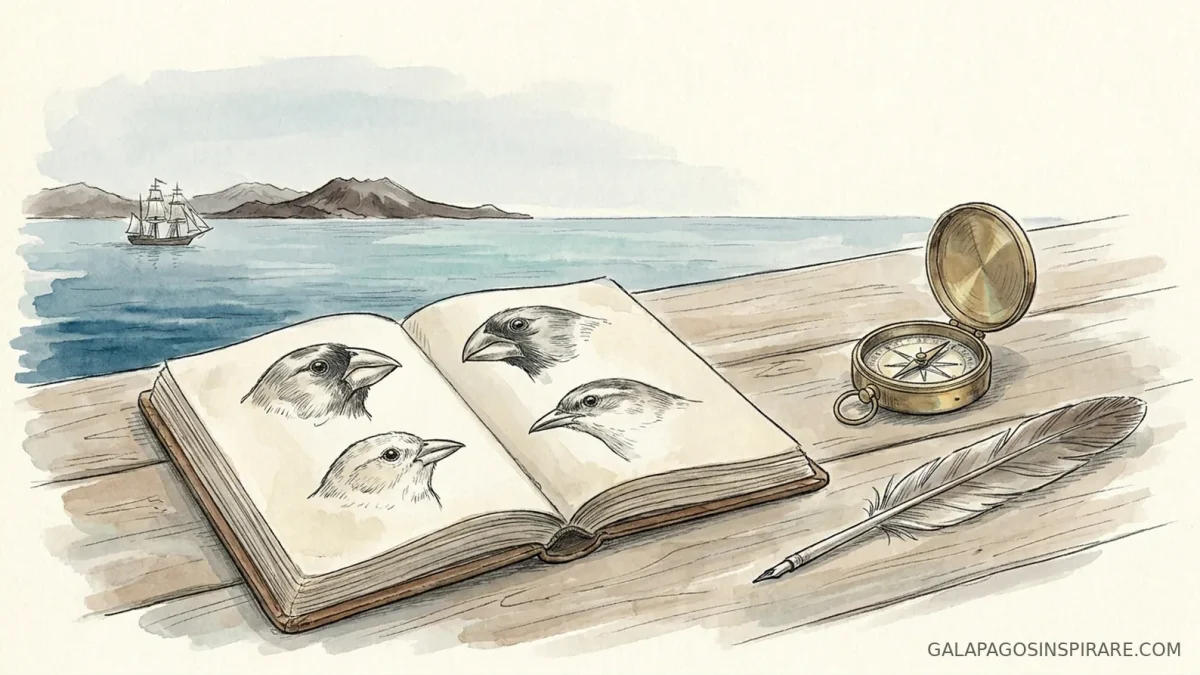
- Finches. He collected many small brown birds but did not always note the island. In England, ornithologist John Gould showed they were a group of closely related finches.
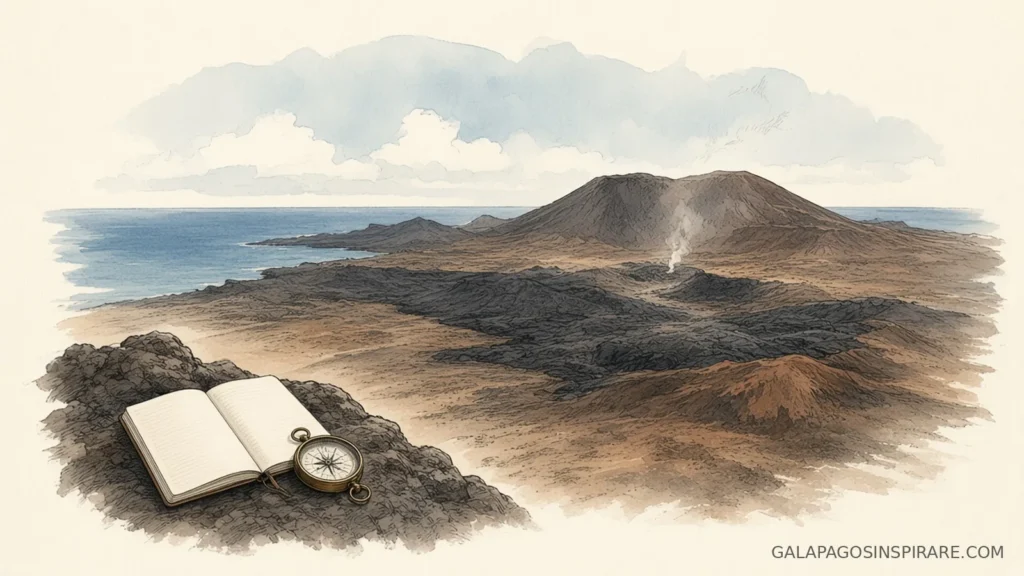
- Lava and volcanoes. As a geologist, he described craters, tuff cones and fresh lava fields, many of which you can still walk on.
These clues, that similar animals differed slightly from island to island, became part of the argument he published in On the Origin of Species in 1859. Today the finches are known as “Darwin’s finches”, and they are still studied in the islands. For the animals you are likely to meet, see wildlife encounters in the Galapagos, and for the geology he loved, our Galapagos volcanoes guide.
Darwin Island and the lost Darwin’s Arch
Darwin Island, the northernmost island of the archipelago, was named after him, but he never set foot on it: the Beagle only sailed past on its way out. The island is closed to land visits. Its waters, however, are among the best dive sites on the planet, famous for schools of hammerhead sharks.
Just off the island stood Darwin’s Arch, a natural rock bridge that collapsed through natural erosion on 17 May 2021, as Ecuador’s Ministry of Environment reported. Two rock pillars remain. Darwin and Wolf can only be reached on dive liveaboards; our Galapagos scuba diving cruise guide explains how those trips work.
The Charles Darwin Research Station on Santa Cruz
Darwin’s name also lives on in science and conservation. The Charles Darwin Foundation was created in 1959, the same year as the Galapagos National Park, and its Charles Darwin Research Station opened in Puerto Ayora, on Santa Cruz Island, in 1964. The station is home to the giant tortoise breeding program that has helped bring several tortoise populations back.
The station welcomes visitors, and the Charles Darwin Foundation lists free admission on its website; check current opening hours before you go. It is an easy stop on any trip that includes Santa Cruz, and it fits well into the best Galapagos itinerary for first-time visitors.
How to follow Darwin’s footsteps today
On a small-ship cruise
A cruise is the easiest way to reach places like Tagus Cove or Cerro Brujo, which have no hotels nearby. Eastern routes usually include San Cristóbal and often Floreana; western routes include Isabela’s Tagus Cove. Compare small yachts and expedition ships on our Galapagos cruises page.
Land-based from San Cristóbal and Santa Cruz
If you prefer hotels, San Cristóbal gives you Cerro Tijeretas, where Darwin first landed, and Santa Cruz has the research station. Many land-based programs start under US$1,900 per person. Our island hopping guide explains how to combine islands.
A private “Darwin route” charter
For a family or group, a private yacht can be planned around Darwin’s four islands, within the routes the national park allows. Charters start from around US$80,000 for the boat. See our private yacht charter page for how it works.
Want to travel in Darwin’s footsteps?
Tell us your dates and interests, and our travel designers will suggest a cruise or land-based route that includes the places Darwin explored.
Plan with a designer See Galapagos cruisesFAQ Galapagos Islands and Darwin
What is the connection between the Galapagos Islands and Darwin?
The link between the Galapagos Islands and Darwin is his 1835 visit on HMS Beagle. The differences he saw in tortoises, mockingbirds and finches from island to island later helped him develop his theory of evolution by natural selection.
When did Darwin visit the Galapagos Islands?
The Beagle was in the Galapagos from 15 September to 20 October 1835, about five weeks. Darwin spent around 19 of those days on land.
Which islands did Darwin visit in the Galapagos?
He went ashore on four islands: San Cristóbal (Chatham), Floreana (Charles), Isabela (Albemarle) and Santiago (James). He saw several others only from the ship.
Can you visit Darwin Island?
Not on land. Darwin Island is closed to landings, but its waters are a famous dive site that you can reach only on a dive liveaboard.
Is the Charles Darwin Research Station worth visiting?
Yes, especially if you are staying on Santa Cruz. It explains the giant tortoise breeding program, and the Charles Darwin Foundation lists free admission. Check opening hours before you go.