Galapagos Cruise Routes Explained: Northern vs. Western Itineraries
Understand the key differences between Northern and Western Galapagos cruise routes and learn which itinerary best matches your wildlife interests and travel style.
Galapagos Inspīrāre
2/13/20264 min read
Choosing a Galapagos cruise is not simply about selecting a vessel. It is about selecting a route.
The Galapagos archipelago is vast, ecologically diverse, and geographically complex. Each island cluster offers a different wildlife profile, landscape character, and rhythm of exploration, so understanding the difference between Northern and Western Galapagos itineraries is essential when determining the best Galapagos cruise itinerary for your travel style and expectations.
At Galapagos Inspīrāre, we approach cruise selection strategically. The route shapes the experience as much as the yacht itself. While both Northern and Western Galapagos cruise routes offer extraordinary encounters, they differ significantly in marine life, bird colonies, geological formations, and overall atmosphere.
Understanding these nuances ensures that your Galapagos luxury cruise aligns precisely with your interests.
The Structure of Galapagos Cruise Routes
All Galapagos cruise routes operate under strict National Park regulations. Visitor sites are anually pre-approved and carefully rotated to protect the fragile ecosystem. Cruise itineraries are therefore fixed in structure but vary in geographic focus.
Most 7- or 8-day Galapagos cruise routes concentrate on either the Northern Islands, the Western Islands, or a combination of central islands with one of these extensions.
For travelers seeking a deeper experience, understanding the ecological differences between north and west becomes essential.
The Northern Galapagos Itinerary
A Northern Galapagos itinerary typically includes islands such as Genovesa, known as Bird Island, along with stops at places like Santiago, Santa Cruz, and occasionally Bartolomé.
Genovesa is the defining feature of the northern route, as this remote volcanic caldera hosts some of the most impressive seabird colonies in the archipelago. Red-footed boobies, Nazca boobies, frigatebirds, and storm petrels dominate the landscape. For travelers drawn to birdlife and dramatic cliffs, this region delivers unmatched spectacle.
The terrain in the north tends to feel open and windswept. Lava plateaus, elevated trails, and expansive coastal views characterize the walking experience. Snorkeling is excellent, with opportunities to encounter reef sharks, sea lions, and diverse tropical fish species.
Northern routes are often recommended for travelers who prioritize birdlife, enjoy scenic cliff landscapes, appreciate strong hiking elements, and prefer slightly calmer seas during certain seasons.
While marine life remains abundant, the north is particularly celebrated for its avian density.
The Western Galapagos Itinerary
The Western Galapagos itinerary, by contrast, is defined by raw geology and extraordinary marine biodiversity. This route typically includes Fernandina and Isabela Islands, the youngest and most volcanically active parts of the archipelago.
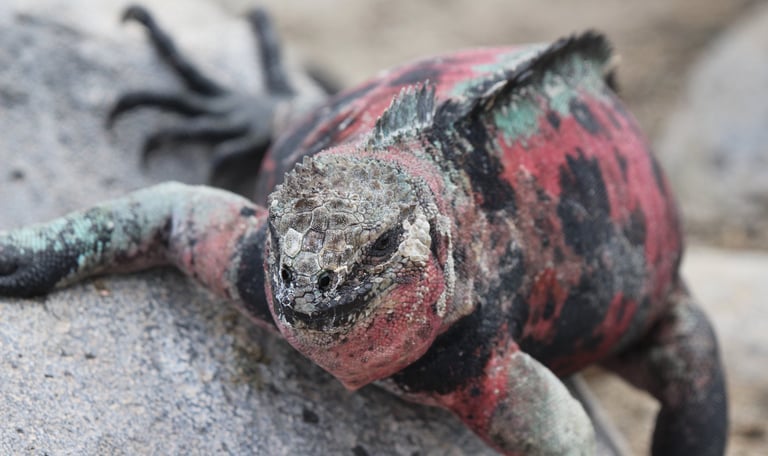
Fernandina is one of the most pristine islands in the world. Here, marine iguanas gather in dramatic numbers along black lava shores. Flightless cormorants, penguins, and sea lions thrive in nutrient-rich waters influenced by the Cromwell Current.
The western region offers the highest probability of encountering Galapagos penguins, which are rarely seen elsewhere. Whale sightings are also more frequent during certain months.
Landscapes in the west feel younger and more dramatic. Jagged lava flows, volcanic cones, and vast marine inlets create a sense of isolation and wildness. Zodiac rides through mangrove-lined coves are common, adding a cinematic dimension to exploration.
Western itineraries are ideal for travelers who prioritize marine wildlife, wish to see penguins, are fascinated by volcanic geology, and seek a more remote and rugged atmosphere
The west is often considered the most biologically intense region of the Galapagos.
Wildlife Comparison: North vs. West
Both Northern and Western Galapagos cruise routes offer iconic species such as giant tortoises, blue-footed boobies, marine iguanas, and sea lions. However, the density and probability of certain sightings differ.
The north excels in large seabird colonies and elevated nesting areas. Photographers interested in bird flight patterns and dramatic cliff compositions often prefer this route.
The west excels in marine diversity and endemic species concentration. Penguin sightings, flightless cormorants, and expansive marine iguana colonies are strongest here.
For travelers focused on reptiles, both regions deliver compelling encounters. However, the western islands often provide more dramatic coastal reptile concentrations.
Sea Conditions and Comfort Considerations
Western Galapagos itineraries involve longer navigation distances. Seas can occasionally feel more dynamic due to exposure to open ocean currents, but modern luxury yachts are well-equipped for stability. Travelers sensitive to motion should consider this factor.
Northern routes typically involve slightly shorter navigation stretches between islands. While weather varies seasonally, the overall perception is that northern routes may feel calmer depending on the month.
Selecting the best Galapagos cruise itinerary therefore requires balancing wildlife priorities with comfort expectations.
Can You Combine Northern and Western Routes?
Some extended itineraries, particularly 14-day programs, combine both Northern and Western Galapagos cruise routes. This approach offers the most complete ecological coverage of the archipelago.
However, for standard 7- or 8-day cruises, operators typically focus on one primary region to maintain depth without excessive transit time.
At Galapagos Inspīrāre, we always evaluate the length of stay, wildlife priorities, seasonality, vessel design and stability, and travel style (shared departure vs. private charter), as this ensures a perfect route selection.
Route Selection Within a Luxury Context
For many travelers, choosing between Northern and Western Galapagos itineraries is not simply about species lists. It is about the overall feel of the journey.
Northern itineraries feel elevated, expansive, and bird-centric. Western itineraries feel dramatic, remote, and marine-driven.
The vessel itself also plays a role. A Galapagos luxury cruise aboard an intimate yacht enhances either route by offering refined accommodations, flexible pacing, and personalized guiding.
Private charters further elevate route selection. Families, photographers, and affinity groups can align wildlife focus with group interests, creating a seamless and tailored expedition.
Which Is the Best Galapagos Cruise Itinerary?
There is no universally superior route. The best Galapagos cruise itinerary depends entirely on your priorities.
If birdlife, dramatic cliffs, and iconic seabird colonies are central to your interests, a Northern Galapagos itinerary may be ideal.
If marine biodiversity, penguins, volcanic landscapes, and remote atmosphere are your focus, the Western Galapagos itinerary often provides deeper fulfillment.
For travelers with flexibility, extended cruises that combine both regions deliver the most complete perspective of the archipelago’s ecological diversity.
The Galapagos Inspīrāre Approach
At Galapagos Inspīrāre, we do not recommend cruise routes generically. We match travelers with itineraries based on wildlife priorities, comfort expectations, seasonality, and vessel quality.
Our curated portfolio of luxury yachts and expedition vessels allows us to offer both Northern and Western Galapagos cruise routes with confidence, as we know that choosing the right route transforms a cruise into a meaningful expedition.
Expert guidance · Fully tailor-made · No obligation
+593 96 421 2626 / +593 421 0304
© 2025. Galapagos Inspīrāre. All Rights Reserved. Crafted in Ecuador.
Meaningful journeys designed with intention, elegance, and deep local expertise.
Currency: USD
JOURNEYS
TRAVEL SUPPORT
ABOUT
Travel Requirements
Before You Travel
Payment & Policies
CONTACT US
Registro Turístico: 987912
LUAE: 655164