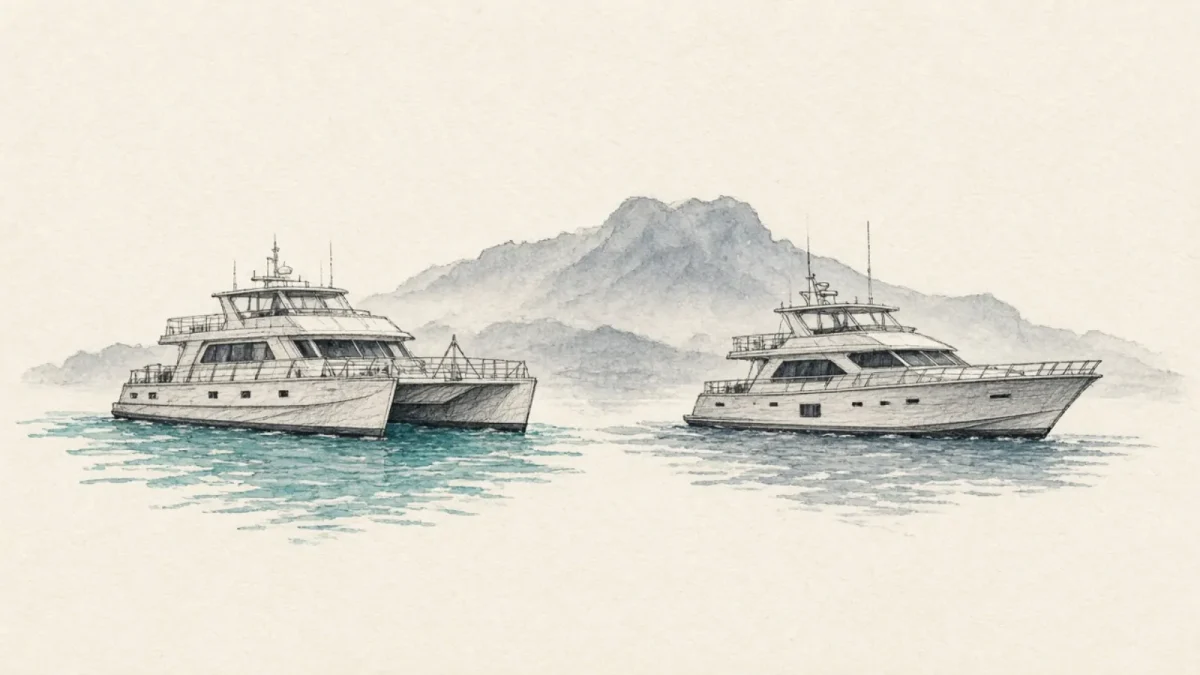
Choosing a galapagos catamaran vs yacht shapes how you move through the islands, how you rest between landings, and how close you feel to the water. Both vessel types deliver expedition-grade access; the difference is in motion, space, and the rhythm of days aboard. This guide helps you match the right expedition vessel to the way you travel.
What “Catamaran” and “Yacht” Mean in the Galápagos?
In local usage, “catamaran” usually means a twin-hull expedition boat with broad decks and a stable platform. “Yacht” often means a monohull or displacement expedition yacht with a classic profile and a different motion at sea. Neither label alone tells you cabin quality or guide standards—those live in the specific ship—but the hull form changes how the week feels.
Why galapagos catamaran vs yacht Changes Your Week Aboard?
Stability, cabin layout, and social flow differ more than many travelers expect. A thoughtful galapagos catamaran vs yacht decision is less about “better” and more about how you want to wake up, move between decks, and recover after long shore landings.
Stability, Space, and How You Feel Underway
Catamarans typically roll less in beam seas and offer wide outdoor lounges. Yachts can feel more traditional underway, with a different pitch and a more linear deck plan. If you are sensitive to motion, ask specifically about hull type, itinerary exposure, and cabin location—not only star ratings.
Cabins, Decks, and Social Flow
Catamarans often place cabins in twin hulls with easy access to outdoor space. Yachts may concentrate suites along a central corridor with salons that feel more intimate. Walk the deck plan: breakfast light, sunset vantage, and where quiet corners exist when the group is lively.
Itineraries: The Vessel Serves the Route
Visitor sites are assigned by park rules and operator permits. The right hull still matters for comfort between sites. Review northern vs western routes alongside vessel personality—see our northern vs western itineraries guide and the expedition vessels hub.
Who Should Choose a Catamaran?
Choose a catamaran when you want a broader outdoor platform, often easier conversation spaces, and a hull form many guests find reassuring. Explore examples like Endemic and Elite.
Who Should Choose a Yacht?
Choose a yacht when you prefer a classic expedition silhouette, a more linear social flow, or a specific cabin style you have already researched. Compare with Natural Paradise and our overview of Galápagos cruises.
How to Decide in Three Steps?
- Name your non‑negotiables: motion sensitivity, cabin privacy, balcony, group size.
- Match those to hull type and deck plan—not only photos.
- Confirm itinerary dates and guide philosophy before you lock the cabin.
Service, Guides, and the Feel of the Week
Naturalist quality and pacing define the expedition more than chrome. Once the service bar is equal, revisit galapagos catamaran vs yacht as a comfort filter—not the only filter. For a related comparison lens, see small-ship vs luxury yacht cruises.
FAQ galapagos catamaran vs yacht
Is a galapagos catamaran vs yacht decision mainly about seasickness?
Motion comfort is one reason travelers weigh galapagos catamaran vs yacht, but cabin layout, outdoor space, and social style matter just as much. Ask for honest notes on hull behavior on your specific itinerary.
Do catamarans and yachts visit the same visitor sites?
Access depends on permits and itinerary design more than hull type alone. Confirm the weekly route, not only the vessel brochure.
Which feels more luxurious—catamaran or yacht?
Luxury is cabin finish, service ratio, and quiet details. Hull type shapes atmosphere; it does not automatically equal a higher tier.
Should first-time visitors prefer one vessel type?
First-timers often prioritize stability and clear deck flow. Share your priorities and we will match vessel and route together.
Can I switch vessel type if my dates are flexible?
Yes—flexibility unlocks better cabin inventory. Hold preferred dates loosely until hull type and suite location are confirmed.