
Best Time to Visit Galápagos in 2026: A Month-by-Month Breakdown
When is the best time to visit the Galápagos Islands? Our 2026 month-by-month guide covers wildlife, weather, crowds and what to expect each season. Plan smarter — get a free quote.
Galapagos Inspīrāre
5/18/20263 min read
The Galápagos Islands sit directly on the equator, which means the weather logic that governs the rest of the world doesn't quite apply here. There are two seasons, the warm, wet season and the cool, dry season, and both have distinct advantages. The wildlife calendar turns on its own schedule, which overlaps with, but isn't dictated by, the weather.
This guide breaks it down month by month, with the specific wildlife highlights, ocean conditions, and practical considerations you need to plan a trip that matches what you actually came for.
The Two Galápagos Seasons
Warm Season: December to May
Water temperatures climb to 22–28°C. The islands turn green. Baby sea lions are everywhere. Floreana's flamingos are in full color. Manta rays and whale sharks appear in January and February. Seas can be calmer during this period, making speedboat crossings more comfortable. The trade-off: occasional tropical showers and slightly reduced underwater visibility in some spots.
Cool, Dry Season: June to November
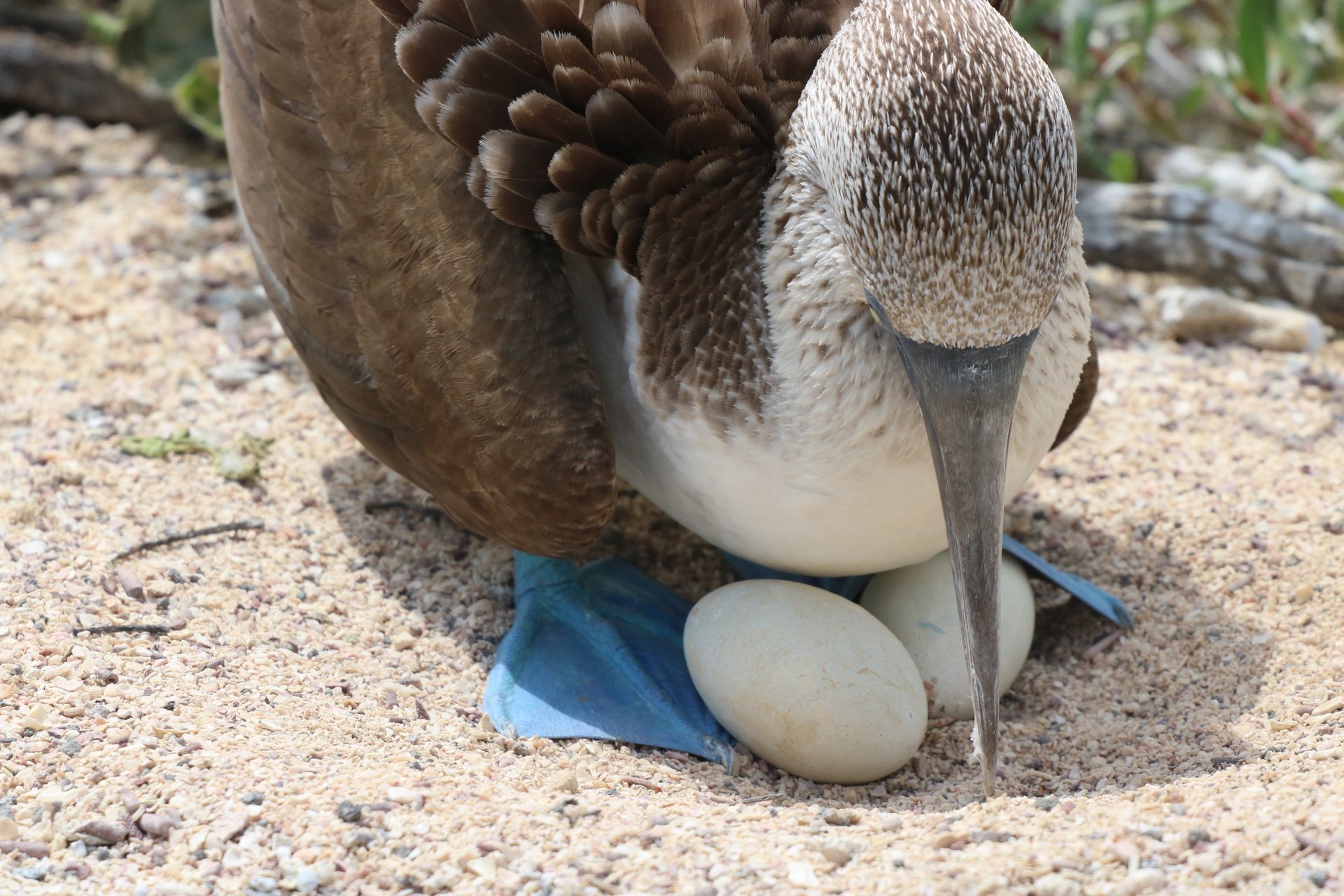
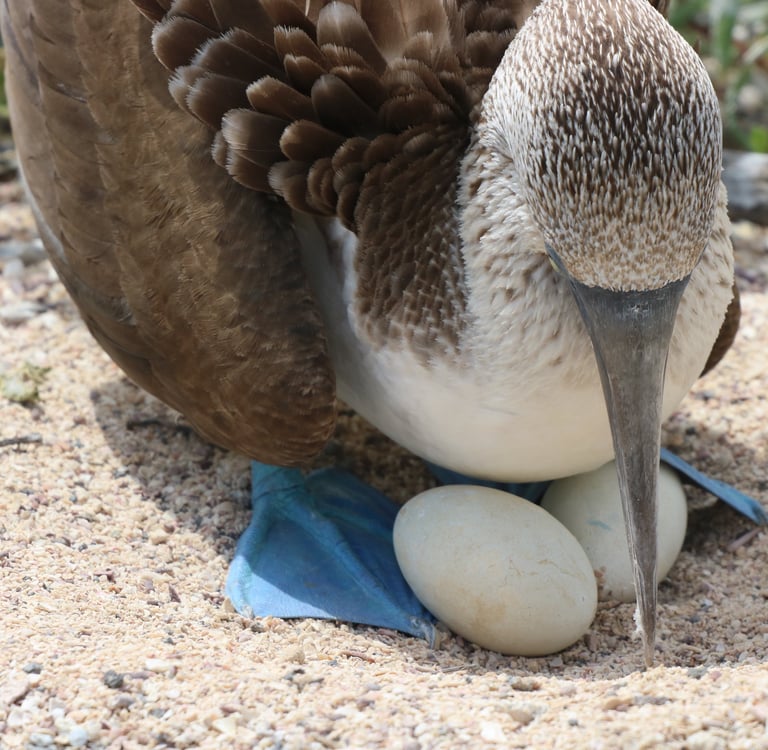
The Humboldt Current brings cold, nutrient-rich water from the south, dropping ocean temperatures to 15–21°C and turning the waters into some of the most biologically productive on Earth. Snorkeling and diving hit their peak. Blue-footed boobies nest on Española and North Seymour. Sea conditions can be rougher between July and September, relevant if you're sensitive to boat movement, but irrelevant on a land-based itinerary.
2026 Wildlife Calendar — Key Highlights by Month
Jan–Feb: Manta rays, whale sharks, baby sea lions, albatross return to Española
Mar–Apr: Lush landscapes, green sea turtle nesting, waved albatross courtship
May–Jun: Transition month — both seasons' advantages overlap
Jul–Aug: Blue-footed booby nesting, penguins most active, best diving visibility
Sep–Oct: Marine iguanas nesting, sea lion pups, land iguana activity peaks
Nov–Dec: Sea turtle nesting begins, albatross depart, giant tortoise migration on Santa Cruz
Month-by-Month Guide
January & February
Warm water, calm seas, and the most dramatic marine megafauna of the year. Whale sharks arrive at Darwin and Wolf Islands in February, and mantas can be spotted around Isabela and Santa Cruz. Baby sea lions are newborns, curious, unafraid, and genuinely delightful in the water. It's one of our favorite months to run an island hopping itinerary.
March & April
The islands are at their greenest. This is the season of the waved albatross courtship on Española Island, one of the most theatrical wildlife displays in the Galápagos. Seas are generally calm, making this an excellent window for families or anyone prone to motion sickness on water crossings.
May & June
May is a transitional month and often underrated. Crowds are lower than peak months, prices can be slightly better, and the wildlife calendar is full. By June, the Humboldt Current arrives and water visibility improves dramatically, making this one of the best months for diving and snorkeling. Blue-footed boobies begin their nesting displays on Seymour Norte.
July & August, Peak Season
The most popular months to visit, and for good reason. Wildlife activity is at its highest across almost every species. Water temperatures are cooler but visibility is exceptional. Snorkeling at Los Túneles, Kicker Rock, or the Tintoreras feels otherworldly. The trade-off: this is peak booking season, and the best hotels and guided experiences fill up months in advance. Book July–August by April at the latest.
"July in the Galápagos is when every species seems to be doing something remarkable at once.
We've never had a guest leave that month disappointed."
September & October
Seas calm down after the roughest weeks of July–August. Marine iguanas nest on the beaches. Land iguana activity increases. October sees sea turtle nesting begin on Santa Cruz. The schools are back in session in most source markets, which means slightly lower visitor numbers than July–August, but the wildlife doesn't know that.
November & December
A beautiful shoulder season. Giant tortoises migrate down from the highlands of Santa Cruz in late November, crossing the roads in a spectacle that no one who sees it forgets. The islands begin to shift back toward the warm season. December is excellent for families planning around the holiday window.
When Should You Book?
The practical answer: as early as possible, especially for July – August or December. The best boutique hotels on Isabela and Santa Cruz fill up 4–6 months in advance during peak season. Naturalist guides with private availability book even faster.
For shoulder season travel, May – June or October – November, you can often move with 6–8 weeks' notice and still access excellent availability. That said, inter-island flight seats are limited year-round, and waiting creates real constraints on your itinerary design.
At Galapagos Inspīrāre, we typically recommend starting your planning process 4–6 months before your target dates. A free 30-minute consultation call is enough to give you a full itinerary concept, a clear price, and a timeline for what needs to be locked in when.
Find your perfect travel window
Tell us your dates and what you want to see.
We'll do the rest.
Free itinerary consultation. No commitment.
We design every trip from scratch around the travelers taking it.
For a complete overview, explore our Ultimate Luxury Galápagos Travel Guide.
+593 96 421 2626 / +593 421 0304
© 2025. Galapagos Inspīrāre. All Rights Reserved. Crafted in Ecuador.
Meaningful journeys designed with intention, elegance, and deep local expertise.
Currency: USD
JOURNEYS
TRAVEL SUPPORT
ABOUT
Travel Requirements
Before You Travel
Payment & Policies
CONTACT US
Registro Turístico: 987912
LUAE: 655164